

INSIGHTS & INNOVATIONS
Latest industry updates, health wearable trends, and kids safety technology guides from iTIME.
China Best Wearable Health Technology Watch Suppliers
Table of Contents
China has become an important sourcing base for connected health devices, including watches that track activity, heart rate, sleep, and other wellness signals. For buyers comparing China Best Wearable Health Technology Watch Suppliers, the challenge is not simply finding a low price. It is finding a manufacturer that can support dependable production, clear communication, and consistent product quality.
A Wearable Health Technology Watch may look simple on a product page. In daily use, sensor placement, battery life, app stability, and the fit of the strap all matter. Small details count. A delayed reading or confusing dashboard can weaken user trust. Buyers should ask suppliers for product specifications, sample units, quality-control procedures, and realistic production timelines. They should also check whether performance claims are supported by suitable testing. A wellness watch should not be presented as a substitute for professional medical advice unless its intended use and evidence support that claim.
Supplier evaluation takes patience. Request a working sample and test it across ordinary routines, such as a brisk walk, a night of sleep, and a full day away from a charger. Compare readings carefully, but remember that consumer devices can vary. Ask who handles software updates, warranty issues, and replacement parts after delivery. Certifications and reports should be reviewed for relevance and validity, not accepted as decoration. Some supplier listings may omit practical limitations. That deserves a follow-up question. This guide introduces supplier-selection factors, product capabilities, and common sourcing considerations, helping readers make a more informed shortlist without assuming every factory offers the same level of expertise.
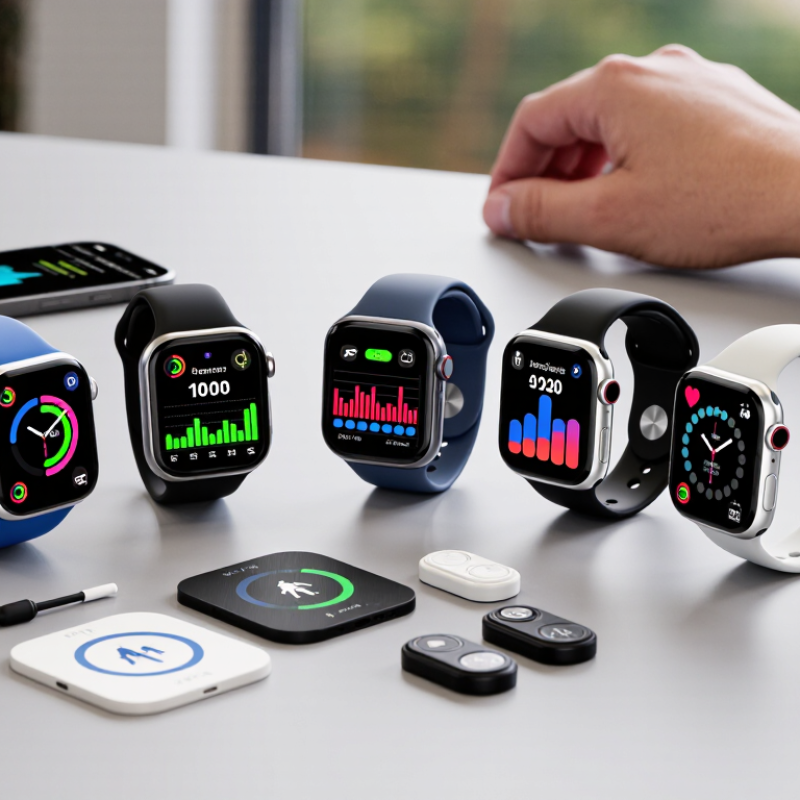
What Defines a Wearable Health Technology Watch?
A wearable health technology watch is a wrist-worn device that uses sensors and software to monitor health-related signals over time. Common measures include heart rate, movement, and sleep patterns; some models also estimate blood oxygen or skin temperature. It is not just a screen. The value lies in turning repeated readings into understandable trends, such as a resting pulse changing across several weeks. Rock Health’s 2023 Digital Health Consumer Adoption Survey reported that 44% of surveyed US consumers owned a wearable. That suggests broad interest, but ownership alone does not prove health benefit.
Sensor quality and clear explanations matter. IDC’s Worldwide Quarterly Wearable Device Tracker reported 492.1 million wearable-device shipments worldwide in 2022. Shipments are not the same as health-focused watches, and they say nothing about accuracy. A useful device should explain what it measures, how often readings are collected, and where estimates may be unreliable. For example, a wrist sensor can produce different readings during exercise or loose contact. Small details matter. A watch can support personal tracking, but it cannot diagnose a condition from a single reading. Product descriptions sometimes make this distinction poorly; buyers should check the measurement method and seek clinical advice when symptoms persist.
What Defines a Wearable Health Technology Watch?
Weekly activity targets a health watch can track
The WHO recommends adults do 150–300 minutes of moderate-intensity aerobic activity, or 75–150 minutes of vigorous-intensity activity, per week. A wearable watch can track activity duration and help users monitor progress; it is not a diagnostic device. Source: WHO Guidelines on Physical Activity and Sedentary Behaviour (2020).
Key Health Monitoring Features and Data Capabilities
A useful health watch should show more than a daily step total. Look for continuous heart-rate trends, on-demand ECG, blood-oxygen estimates, sleep records, and clear timestamps. A morning graph is easier to interpret when it separates resting readings from a brisk walk. Useful, but imperfect. Sensors can lose contact when a wrist moves, a strap sits loosely, or skin is damp.
Data quality deserves equal attention. In the 2019 New England Journal of Medicine Apple Heart Study, Perez et al. reported irregular-pulse notifications for 0.52% of 419,297 participants. Among participants who returned for follow-up ECG patch monitoring, 34% had atrial fibrillation detected. The finding shows why a watch alert should prompt appropriate clinical follow-up, not serve as a diagnosis. Data needs context.
A 2020 npj Digital Medicine study by Bent et al. found that optical heart-rate measurement errors varied with activity and skin tone. Suppliers should therefore explain sensor limits, sampling intervals, and how readings are stored or exported. Check whether records include dates, units, and missing-data indicators. These details matter during a clinician review. I would still ask how sleep stages are validated; polished charts can imply more certainty than the measurements support.
China Best Wearable Health Technology Watch Suppliers - Key Health Monitoring Features and Data Capabilities
The table below summarizes common capabilities found in wearable health-monitoring watch solutions. Specifications vary by device configuration, sensor design, firmware, and applicable regulatory requirements; ranges are indicative rather than guaranteed product specifications.
| Capability Area | Monitoring Feature | Typical Data Output | Common Data Capabilities | Important Considerations |
|---|---|---|---|---|
| Cardiovascular | Optical heart-rate monitoring | Beats per minute (bpm), resting and activity readings | Periodic or near-continuous sampling; trend views; timestamped records | Motion, fit, skin characteristics, and low temperature can affect optical readings. |
| Cardiovascular | Single-lead electrocardiogram (ECG), where supported | Short electrical waveform and derived rhythm summary | On-demand recording; exportable waveform or report in supported systems | Availability and permitted interpretation depend on device clearance and intended use; it is not a substitute for clinical diagnosis. |
| Blood oxygen | Peripheral oxygen saturation (SpO₂) estimation | Percentage estimate, sometimes paired with pulse rate | Spot checks or scheduled readings; daily and overnight summaries on some devices | Wrist-based estimates may differ from medical-grade measurements; movement and sensor contact matter. |
| Temperature | Skin-temperature trend tracking | Relative change or temperature trend, often during sleep | Baseline comparisons; nightly or periodic trend records | Skin temperature is not the same as core body temperature and can be influenced by the environment. |
| Activity and movement | Step, distance, and activity tracking | Step count, estimated distance, active minutes, and movement intensity | Daily totals; goal tracking; activity-session summaries | Distance and energy expenditure are estimates influenced by profile settings and algorithms. |
| Sleep | Sleep duration and pattern analysis | Estimated sleep and wake times; stage estimates may be available | Nightly summaries; multi-day trends; optional linkage with heart-rate and SpO₂ records | Sleep stages are algorithmic estimates and should not be treated as a clinical sleep study. |
| Stress and recovery | Heart-rate variability (HRV) and derived indicators | HRV values or relative stress and recovery scores | Trend charts; selected resting or sleep-period measurements | HRV varies with many factors and is most useful for personal trends rather than standalone conclusions. |
| Location and workouts | GNSS-assisted outdoor activity recording | Route, pace, elapsed time, and estimated distance | Workout files and route history; device may use built-in or connected-phone location | GNSS availability, battery use, and location accuracy vary with surroundings and device design. |
| Connectivity and integration | Phone synchronization and data exchange | Bluetooth data sync; selected models may include Wi-Fi or cellular connectivity | Companion-app dashboards; API or health-platform integration where supported | Supported operating systems, APIs, permissions, and export formats differ between solutions. |
| Data management | History, reporting, and export | Timestamped measurements, summaries, and user-facing charts | On-device buffering and app or cloud history; CSV, PDF, or API access may be available | Confirm retention periods, export scope, data ownership, and deletion controls before deployment. |
| Privacy and security | Protection of personal health-related data | Account-linked records and device-to-app data transfers | Potential controls include encryption, access management, consent settings, and account deletion | Verify implemented safeguards, storage location, privacy policy, and applicable data-protection obligations. |
| Power and wearability | Battery life and water resistance | Battery duration varies by use; water resistance is stated using a device-specific rating | Charging status and low-battery alerts; rating details may be provided in product documentation | Frequent sensing, GPS, display use, and connectivity can reduce battery life; water ratings have defined limits. |
Note: Wearable measurements and algorithmic scores are generally intended for wellness and personal trend tracking unless a specific function is cleared or authorized for medical use in the relevant market.
China’s Wearable Health Watch Supplier Landscape
China’s wearable health watch supplier landscape spans component makers, design houses, and factories offering original equipment manufacturing. Many suppliers cluster around established electronics and manufacturing hubs, where screen, sensor, battery, and enclosure partners can work within short supply chains. This can speed up development. It does not guarantee quality.
A typical project may combine an optical heart-rate sensor, motion tracking, a small display, and a charging dock. Buyers should ask how suppliers validate readings across different wrist sizes, skin tones, and activity levels. Request sample units and review test records, firmware update plans, and production inspection procedures. Details matter. A polished prototype may behave differently after thousands of units leave the line.
Supplier selection also depends on software support, communication, and realistic production schedules. Ask who owns each stage, from industrial design to final assembly, and how defects are recorded and corrected. Health-related measurements should be described carefully; a consumer watch is not automatically a clinical instrument. Some supplier profiles can look stronger on paper than in practice, and that is worth admitting. A factory visit, clear acceptance criteria, and a small pilot order can reveal gaps before a larger commitment.
How to Evaluate Chinese Watch Suppliers
When evaluating Chinese wearable watch suppliers, begin with a clear product brief, not a glossy catalogue. Request written specifications for sensors, battery life, display, materials, and app functions. Ask how readings are tested against reference equipment and under what conditions. A heart-rate feature is not proof of medical accuracy. Ask for evidence.
Order samples from the proposed production line, not only a hand-picked demo unit. Check pairing time, wrist comfort, screen visibility outdoors, charging contacts, and readings during a short walk. Record results across several units. No checklist catches everything. Suppliers should explain quality checks, defect handling, component changes, and how they keep sample and mass-production units consistent.
Review communication and documentation too. Can the team answer technical questions clearly, share test reports, and confirm realistic lead times? Ask about firmware updates, app maintenance, data handling, and support after shipment. These details affect the user’s experience as much as the watch casing. Compare quotations by included tests, packaging, and warranty terms, not price alone. A rushed decision can look efficient; sometimes it only moves the uncertainty downstream.
Manufacturing Standards, Certifications, and Sourcing Considerations
When evaluating China-based suppliers of wearable health technology watches, examine the production system, not just the sales presentation. Ask whether the factory maintains an ISO 13485 quality management system, where relevant, and verify the certificate’s scope, site, and validity. A certificate is useful, but it does not prove every watch performs accurately. Details matter.
Request material declarations and appropriate skin-contact testing, plus documented checks for battery safety, water resistance, and optical sensors. For medical claims, ask for evidence against applicable requirements; wellness data should not be presented as a diagnosis. Review calibration records, lot traceability, incoming-component inspections, and firmware change controls. Ask for recent test reports, not just a logo on a PDF.
Before ordering, compare a pilot batch with the approved sample. Test it during sweat, movement, and repeated charging. Confirm who owns the tooling, how defects are handled, and whether subcontractors can be audited. Some problems appear only after months of use. A checklist can still miss things. Ask suppliers to explain corrective actions and realistic production capacity, even when their answers are less polished.
FAQS
It commonly tracks heart rate, movement, and sleep patterns. Some models estimate blood oxygen or skin temperature.
No. A single wrist reading cannot diagnose a condition. Seek clinical advice if symptoms persist.
Exercise or loose wrist contact can affect sensor readings. Small details matter.
No. Ownership shows interest, not proven benefit. Tracking trends may help, but results need careful interpretation.
Ask how readings are tested across wrist sizes, skin tones, and activity levels. Request sample units and test records.
A polished sample may behave differently after thousands of watches leave the factory. That gap is easy to underestimate.
Review firmware update plans, inspection procedures, production schedules, and how defects are recorded and corrected.
Not by itself. Set clear acceptance criteria and place a small pilot order. I might still miss something.
Conclusion
A Wearable Health Technology Watch combines everyday convenience with health-focused monitoring, helping users track selected indicators and understand changes over time. Depending on its design, it may collect information such as heart rate, blood oxygen estimates, sleep patterns, activity, and other wellness data. The value of these features depends on measurement consistency, clear data presentation, battery life, device compatibility, and thoughtful privacy controls.
China’s supplier landscape includes manufacturers with different capabilities in product design, component selection, software integration, customization, and production scale. When evaluating suppliers, buyers should compare technical specifications, sample quality, communication, production capacity, quality-control processes, and after-sales support. Sourcing decisions should also consider applicable manufacturing standards, relevant certifications, testing documentation, packaging, lead times, and order requirements. A careful review of these factors can help buyers identify a suitable supplier and set realistic expectations for product performance and delivery.

Blog Tags: