

INSIGHTS & INNOVATIONS
Latest industry updates, health wearable trends, and kids safety technology guides from iTIME.
How to Choose a Real Time Activity Tracker Watch in 2026?
Table of Contents
- Define Real-Time Activity Tracking and Its Main Uses
- Identify the Metrics and Activities You Need to Monitor
- Compare Sensors, Accuracy, Battery Life, and Data Updates
- Evaluate Comfort, Compatibility, Privacy, and Smart Features
- Select the Best Watch for Your Budget and Daily Routine
- FAQS
- Conclusion
- Related Posts
Choosing a Real Time Activity Tracker Watch in 2026 means looking beyond step counts and polished product photos. The right watch should fit your daily routine, measure activity consistently, and present useful information without turning every movement into a score. Check whether its heart-rate readings, GPS, sleep estimates, and workout tracking suit your needs. Then consider battery life, comfort, phone compatibility, and how easily you can review or export your data. Small details matter. A bright screen is helpful on a sunny walk; a bulky case may feel distracting after several hours.
Digital-medicine expert Dr. Eric Topol has expressed a related idea: “The future of medicine is the consumer.” That perspective makes personal health data worth considering, but it does not make every watch a medical device. Treat readings as estimates, especially when comparing sleep stages or short-term changes in heart rate. Look for clear explanations of what the device measures, how often it syncs, and what happens to your information. Independent testing and transparent product documentation deserve more weight than dramatic marketing claims. Still, no tracker is perfect. A feature-rich watch may need daily charging, while a simpler model may miss tools you value. The best choice is usually the one you will wear consistently, understand clearly, and trust for everyday activity—not one that promises certainty.
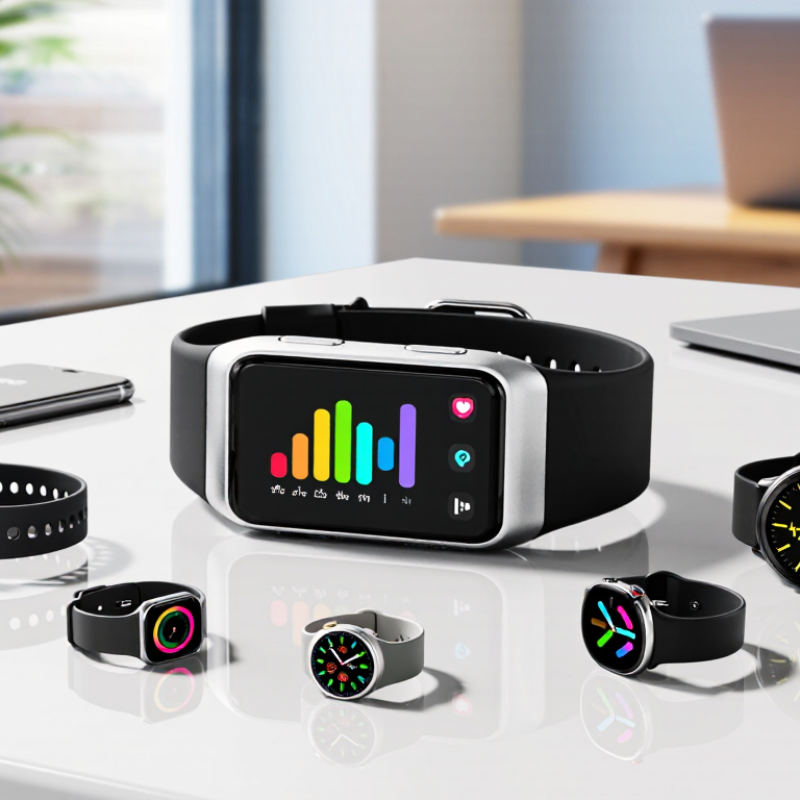
Define Real-Time Activity Tracking and Its Main Uses
How to Choose a Real-Time Activity Tracker Watch in 2026?
Define Real-Time Activity Tracking and Its Main Uses
Real-time activity tracking means recording movement as it happens and showing updated measures on a watch or connected screen. Common measures include steps, heart rate, active minutes, and estimated distance. Some devices also provide prompts when you have been still for a while. The World Health Organization’s 2024 physical activity report estimates that 31% of adults worldwide do not meet recommended activity levels. A tracker can make daily patterns easier to notice, such as long stretches at a desk or a short evening walk.
These tools are useful for setting personal targets, reviewing exercise sessions, and spotting changes in routine. The American College of Sports Medicine’s 2025 fitness trends survey again ranked wearable technology among the leading trends. Still, a watch is not a diagnosis tool, and its estimates can differ from clinical measurements. Heart-rate readings may shift when the strap is loose, your wrist is cold, or movement is vigorous. I have found that the simplest data can be the most actionable: a gentle reminder to stand may matter more than a crowded dashboard.
Tips: Choose a watch that displays the measures you will actually use. Check whether readings update quickly during your usual activities, and wear it snugly above the wrist bone. Compare trends over several days, not one unusual afternoon.
Identify the Metrics and Activities You Need to Monitor
How to Choose a Real Time Activity Tracker Watch in 2026?
Identify the Metrics and Activities You Need to Monitor
Start with the activities you actually do. A runner may need pace, distance, and heart-rate trends, while someone building a walking habit may care more about daily steps and active minutes. Choose only metrics you can use. A crowded dashboard can distract from the one change that matters.
For a useful benchmark, the World Health Organization recommends adults get at least 150 minutes of moderate-intensity aerobic activity each week, or 75 minutes of vigorous activity, plus muscle-strengthening work on two or more days. A tracker can help you see whether brisk walks add up. Check that its activity categories match your routine, including cycling, swimming, or strength sessions. Small details matter: Can you read the screen outdoors? Does the watch record a workout when your hands are busy?
Treat measurements as estimates, not medical facts. A 2017 Stanford-led study in the Journal of Personalized Medicine tested seven wrist-worn devices and found heart-rate error averaged 5.86 percent, while energy-expenditure error averaged 27.4 percent. Calories are especially rough. Compare trends over several weeks instead of reacting to one odd reading. Sleep stages may also look precise without being exact; that part is easy to forget. Pick a device whose data you understand, and be willing to ignore metrics that do not help you act.
Compare Sensors, Accuracy, Battery Life, and Data Updates
A real-time activity tracker watch should match the way you move, not just list impressive sensors. Optical heart-rate sensors work well for steady walks, but fast intervals and loose straps can cause noisy readings. For outdoor routes, built-in satellite tracking can map distance without a phone; check whether frequent location updates drain the battery. Small details matter.
Accuracy is more than a number on the screen. During a test walk, compare the watch’s distance and heart-rate trends with a familiar route and a reliable reference device. Look for consistent results across several sessions, not one perfect workout. Skin tone, wrist fit, cold weather, and arm movement can affect optical readings. I still tend to trust a clean-looking graph too quickly; it deserves a closer check.
Battery life depends on settings, especially continuous heart-rate sampling, GPS use, and screen brightness. A watch rated for several days may need nightly charging when tracking long outdoor workouts. Check how often data updates in the app: near-live syncing is useful during training, while delayed syncing may suit everyday step tracking. Test the update timing yourself. A few minutes can feel longer when you are waiting for a route to appear.
How to Choose a Real Time Activity Tracker Watch in 2026? – Compare Sensors, Accuracy, Battery Life, and Data Updates
Compare common watch configurations by sensor capability and typical use. Battery life and measurement performance vary with fit, settings, activity, temperature, and software.
| Watch configuration | Typical sensors | Accuracy and limitations | Data update behavior | Typical battery considerations | Best suited for |
|---|---|---|---|---|---|
| Basic activity tracker watch | Wrist optical heart-rate sensor, accelerometer, gyroscope; connected-phone GPS may be available. | Step counts and resting heart-rate trends are useful for general tracking, but wrist-based readings can be affected by loose fit, motion, skin characteristics, and temperature. No watch-based GPS means route distance depends on the phone. | Movement and heart-rate samples are commonly recorded periodically; some models increase sampling during workouts. Phone-app syncing may happen in batches rather than continuously. | Often several days to around two weeks, depending on display, sampling, notifications, and workout use. Continuous GPS can reduce runtime substantially. | Everyday activity, sleep routines, and basic heart-rate trends. |
| Multisensor GPS sports watch | Optical heart rate, accelerometer, gyroscope, barometer, compass, and multi-constellation satellite positioning on many models. | Built-in GPS records outdoor pace and routes without a phone. Satellite signal can be degraded by buildings, trees, tunnels, and difficult terrain. Wrist heart rate may lag or become less reliable during rapid intensity changes. | Workout metrics may be recorded at approximately one-second intervals; some watches offer less frequent or adaptive recording to conserve power. Live readings on screen may refresh more often or less often than stored samples. | Typically several days to multiple weeks in watch mode; continuous GPS commonly lasts from several hours to a few dozen hours, depending on settings and model. | Running, cycling, hiking, and training sessions where route and pace data matter. |
| ECG-capable health watch | Optical heart-rate sensor, electrical heart sensor for user-initiated ECG recordings, accelerometer, and often blood-oxygen measurement hardware. | An ECG feature records a short, single-lead electrical signal when the wearer follows the device instructions; it is not continuous ECG monitoring and does not replace clinical evaluation. Wrist oxygen readings can be affected by motion, fit, circulation, and other factors. | Optical heart-rate sampling may run in the background, while ECG and oxygen measurements are generally initiated or scheduled separately. Health data may sync to a phone when a connection is available. | Often around one to several days between charges for feature-rich models; frequent display use, GPS, and health measurements can shorten runtime. | People who want convenient health features alongside everyday notifications and activity tracking. |
| Dual-frequency GNSS performance watch | Optical heart rate, accelerometer, gyroscope, barometer, and multi-band satellite positioning; some models also support external heart-rate sensors. | Using more than one GNSS frequency can improve positioning resilience in challenging environments, but it does not eliminate signal loss or guarantee a more accurate track in every setting. A chest strap can provide more responsive heart-rate data during intense exercise. | High-detail activity recording is commonly available at one-second intervals. Smart recording or power-saving satellite modes may reduce sampling detail or track precision. | Usually longer in standard watch mode than during continuous multi-band GPS use. High-accuracy satellite modes can use considerably more power than lower-power GPS settings. | Long-distance training, navigation, and outdoor activities where route detail is a priority. |
| Display-focused smartwatch with activity tracking | Optical heart rate, accelerometer, gyroscope, and often GPS, compass, barometer, and optional ECG or oxygen features. | Tracking capability can be broad, but sensor quality and available metrics differ by model. Bright displays, frequent app use, and wrist movement can affect both readings and battery life. | Some models show frequently refreshed live metrics during workouts and sync promptly over a phone or Wi-Fi connection. Background health records may use periodic sampling. | Commonly about one to several days, with workout GPS, always-on display, calls, and frequent notifications among the main power demands. | People who want apps, communications, and fitness features in one device. |
Selection tip: Choose based on the activity you need to track, whether built-in GPS is essential, and how often you are willing to charge. Consumer wrist sensors are useful for trends, but no single reading or feature should be treated as a medical diagnosis. Published battery figures are estimates under specified conditions, not guaranteed real-world results.
Evaluate Comfort, Compatibility, Privacy, and Smart Features
A real-time activity tracker should feel comfortable before its feature list impresses you. Wear it for a full day, including a brisk walk, and check for rubbing, sweat buildup, or a clasp that catches on sleeves. The American College of Sports Medicine’s 2024 Worldwide Fitness Trends survey ranked wearable technology as the top fitness trend. That reflects its broad appeal, not a guarantee that every device measures every activity accurately. Check whether its sensors suit your routine, and compare readings with how you feel. Small wrist, long hike? Fit matters.
Compatibility can decide whether useful data stays useful. Confirm that the watch works with your phone’s operating system, fitness apps, and notification settings before buying. Consider battery life, too: frequent charging can leave gaps in sleep or activity records.
Smart features should solve a real annoyance, such as seeing a reminder during a walk without reaching for your phone. More alerts are not automatically better. Review what health and location data the device collects, how long it is stored, and whether you can delete or export it. Privacy settings are easy to overlook when setup is rushed.
I would still question any single score that claims to explain a whole day; bodies are messier than dashboards.
Select the Best Watch for Your Budget and Daily Routine
A real-time activity tracker should fit your routine before it adds features. The American College of Sports Medicine’s 2025 Worldwide Fitness Trends survey ranked wearable technology first among fitness trends. That signals strong interest, not proof that every sensor is useful. For a tight budget, prioritize reliable step counts, heart-rate tracking, and clear phone notifications. If you walk to work, a comfortable watch with readable outdoor display may matter more than advanced training metrics. Check replacement strap costs and whether key features require a subscription.
For frequent workouts, consider built-in GPS, water resistance, and battery life that covers your longest training day. A runner may value route tracking; someone who mainly cycles indoors may not need it. Try the watch’s controls in a shop, if possible. Small buttons can be awkward with damp hands. Compare sleep and recovery estimates cautiously: wrist sensors can support useful patterns, but they are not medical diagnoses. Still, a watch can turn sleep into another score to worry about. That is worth considering. Choose a model that makes daily movement easier, not one that demands constant attention. The best choice is often the simplest device you will actually wear.
How to Choose a Real-Time Activity Tracker Watch in 2026
A practical starting point: choose a watch that fits your budget and routine, and track activity in a way that helps you meet health guidance.
This example schedule totals 150 minutes of moderate-intensity activity across five days. The World Health Organization recommends adults aim for at least 150 minutes of moderate-intensity aerobic activity per week; this is a sample distribution, not a required schedule.
FAQS
Match its features to your routine. Reliable step counts, heart-rate tracking, and clear notifications may be enough for everyday use.
No. Fast intervals, a loose strap, cold weather, and arm movement can affect readings. Compare trends across several sessions.
Walk a familiar route and compare the watch’s distance with a reliable reference. One perfect result proves little.
It can. Frequent location updates, continuous heart-rate sampling, and bright screens may shorten battery life.
Near-live syncing can help during training. Delayed syncing may be fine for daily steps. A few minutes can feel long.
Prioritize dependable step and heart-rate tracking, readable notifications, and comfort. Check strap costs and subscription requirements, too.
No. GPS can help runners track outdoor routes. Indoor cyclists may have little use for it.
Treat them as general patterns, not medical diagnoses. A score can be useful, but it can also become another worry.
Try the controls, especially with damp hands if possible. Small buttons can be awkward. Make sure the watch feels comfortable enough to wear daily.
Conclusion
Choosing a Real Time Activity Tracker Watch in 2026 starts with understanding what real-time tracking means: the watch measures activity as it happens and updates your progress throughout the day. Consider how you plan to use it, such as monitoring steps, workouts, heart rate, sleep, or other personal fitness goals, and prioritize the metrics that matter most to your routine.
Compare sensor performance, measurement consistency, battery life, and how frequently the watch updates its data. Comfort is important for all-day wear, while compatibility with your phone and preferred apps can make the information easier to review. Also consider privacy settings and useful smart features without letting extras distract from your main needs. Finally, set a realistic budget and choose a watch that balances reliable tracking, practical features, and everyday comfort.

Blog Tags: