

Smart Life Blog

INSIGHTS & INNOVATIONS

Latest industry updates, health wearable trends, and kids safety technology guides from iTIME.

0%

Choosing a Bio Sensor Wearable Device supplier is not a simple price comparison. It is a decision about data quality, user safety, product durability, and long-term trust. The right supplier should explain how sensors perform during movement, sweating, skin contact, and repeated charging. A polished demonstration is not enough.

John A. Rogers, a leading bioelectronics researcher, has said, “The skin is an ideal platform for wearable technology.” His observation highlights an important point: comfort and scientific accuracy must work together. A device may look impressive, yet fail when worn during sleep, exercise, or daily work. Ask suppliers for test reports, sensor specifications, calibration methods, battery results, and evidence from real-world users. Check whether their quality system fits the intended market, such as ISO 13485 or relevant electrical safety standards. These standards do not replace independent evaluation.

Look closely at data handling. Who owns the measurements? How are records transferred, stored, and deleted? Can the device connect reliably with existing software? Small details matter, including loose straps, delayed alerts, inaccurate readings, and difficult charging ports. No supplier is perfect. That is the uncomfortable truth. Even experienced buyers can overlook weak after-sales support when the hardware appears advanced.

A responsible supplier welcomes technical questions and admits product limitations. Choose one that provides transparent validation, traceable manufacturing, responsive support, and realistic performance claims. The best partnership is not built on impressive promises. It is built on evidence, clear communication, and continuous review.
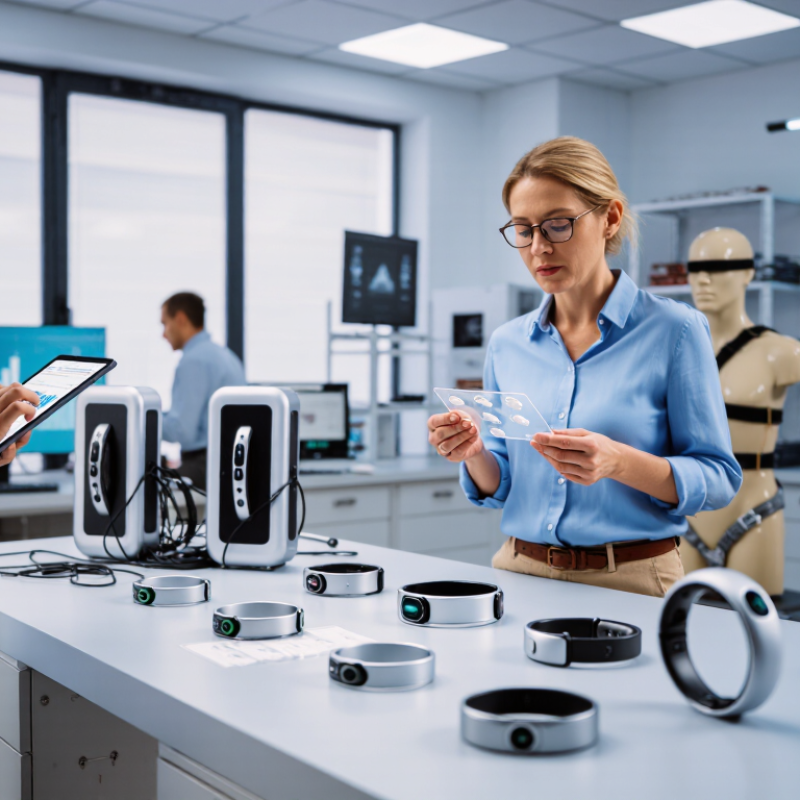
How to Choose a Bio Sensor Wearable Device Supplier

Define Your Bio Sensor Wearable Device Requirements

Before choosing a bio sensor wearable device supplier, define the measurement job precisely. Decide whether you need heart rate, temperature, motion, oxygen saturation, or multiple signals. Specify the target users, wear location, operating hours, and expected environment. A device used during sleep needs different comfort and battery requirements from one used during exercise.

IDC’s Worldwide Quarterly Wearable Device Tracker estimated 537.6 million wearable devices shipped globally in 2024. This scale creates more choices, but not necessarily better evidence. Ask suppliers for validation results, sample-level accuracy, sensor drift data, and testing conditions. Confirm whether results came from laboratory trials or real-world users. Require clear data ownership, encryption practices, update policies, and documented software interfaces. Relevant quality processes should align with applicable medical-device standards when clinical use is intended.

Tips: Build a requirement sheet before requesting quotations. Include minimum battery life, sampling frequency, skin-contact materials, data export formats, and support response times. Test several units on different body types. Small details matter. A supplier may promise high accuracy, yet performance can change with sweat, movement, tattoos, or loose straps. My own first specification would probably be too ambitious. Review it after pilot testing, then remove features that do not improve the decision or user experience.

Assess Supplier Technology and Product Capabilities

How to Choose a Bio Sensor Wearable Device Supplier

Assess Supplier Technology and Product Capabilities

A capable supplier should explain how its sensors capture physiological signals under real-world conditions. Ask about sampling rates, signal quality, calibration methods, and motion-artifact control. Test the basics. Skin contact, sweat, hair, and movement can change readings quickly. Request raw data from walking, resting, and exercising sessions. Clear documentation should describe filtering without hiding important signal loss.

Look beyond specifications. Review the supplier’s testing protocols, validation reports, and manufacturing controls. Reliable teams can show repeatability across devices, users, and production batches. Ask how firmware updates are managed and how data moves into your software environment. Check compatibility with common data formats, secure interfaces, and offline operation. Battery performance also matters. A device that requires daily charging may reduce study compliance.

Ask for failure data. A polished demonstration can still mislead. Supplier claims should be supported by measurable evidence, not attractive dashboards alone. Consider a small pilot with defined acceptance criteria, such as accuracy ranges, wearing time, connection stability, and return rates. Examine how quickly technical staff answer difficult questions. Their response often reveals more than a sales presentation. No supplier is perfect, and early assumptions may prove wrong. Recheck them after testing different skin types, body locations, and activity levels. A dependable partner acknowledges limitations and provides practical correction plans.

Verify Quality Standards, Compliance, and Data Security

How to Choose a Bio Sensor Wearable Device Supplier

A dependable biosensor supplier should prove quality before discussing price. Ask for ISO 13485 certification, recent audit findings, and documented corrective actions. Certification alone is not enough. Check whether the certificate covers the exact device, factory, and software process.

Request evidence from ISO 14971 risk management and IEC 62304 software controls. Review calibration records, biocompatibility testing, battery safety results, and data accuracy across skin tones and motion levels. The FDA’s 2023 guidance also emphasizes cybersecurity throughout a medical device’s lifecycle. A supplier should provide threat models, vulnerability procedures, update timelines, and software bills of materials. Test reports matter more than polished presentations.

Data security deserves equal attention. Confirm encryption during transmission and storage, role-based access, multi-factor authentication, and strict retention rules. Ask where data is processed and who can access it. IBM’s Cost of a Data Breach Report 2024 reported an average healthcare breach cost of 9.77 million dollars. That figure makes weak access controls difficult to justify. Independent penetration testing should be recent and device-specific, not a generic annual document. No checklist is perfect. I would still ask for sample logs, incident records, and a live demonstration of account removal. If a supplier cannot explain what happens after a sensor disconnects, its compliance claims need deeper review.

How to Choose a Bio Sensor Wearable Device Supplier: Verify Quality Standards, Compliance, and Data Security

This timeline highlights key publication or application milestones for standards and regulations relevant to biosensor wearable suppliers. During supplier evaluation, request current certificates, technical documentation, risk-management records, software lifecycle evidence, and documented privacy and security controls aligned with these requirements.

Compare Manufacturing Capacity, Support, and Pricing

How to Choose a Bio Sensor Wearable Device Supplier

Compare Manufacturing Capacity, Support, and Pricing

Manufacturing Capacity

Manufacturing capacity matters when a wearable device moves from prototype to regular production. Ask for evidence, not promises. Review production-line capacity, monthly output, testing equipment, and trained quality staff. A capable supplier should explain how it manages sensor calibration, battery checks, software loading, and final inspection. Request sample production records and realistic lead times. Short lead times can hide rushed testing.

Support

Support often determines whether a project survives unexpected problems. Confirm who handles engineering questions, firmware changes, field failures, and replacement units. Ask about response times and escalation procedures. Clear documentation is essential. Quality systems aligned with recognized medical-device standards can also support traceability and risk control. Still, certificates alone are not enough. Check how the supplier applies them during daily work.

Pricing

Pricing needs a wider comparison than the unit quote. Examine tooling fees, minimum order quantities, calibration costs, packaging, testing, shipping, and future revisions. A low initial price may become expensive after custom changes. Request a detailed quotation with fixed and variable costs. Also compare warranty terms and spare-part policies. Price alone misleads. I have seen teams focus on volume discounts before confirming support quality. That choice looked efficient, but later caused delays. A balanced supplier comparison should include audited capacity, practical support, transparent pricing, and room for honest discussion when assumptions prove wrong.

Select the Supplier Through Testing and Due Diligence

How to Choose a Bio Sensor Wearable Device Supplier

The supplier should earn trust through evidence, not attractive specifications.

Grand View Research’s 2024 market report estimated the global wearable medical device market above US$30 billion in 2023. That growth attracts capable suppliers and weak imitators. Test the signal.

Request independent accuracy data for heart rate, temperature, oxygen saturation, or other claimed measurements. Ask how many participants joined the validation study. Check age, skin tone, activity level, and environmental conditions.

A sensor tested only on seated adults provides limited confidence. Repeat the test.

Use Bland–Altman analysis, sensitivity, specificity, and confidence intervals where appropriate. Inspect raw data, not only polished averages. Verify performance during sweat, motion, loose straps, and low battery conditions. These details expose weaknesses quickly. Some suppliers may resist.

Due diligence must cover the full product lifecycle. Review the scope of the ISO 13485 certificate, supplier audit records, complaint trends, corrective actions, and component traceability. Confirm testing against relevant standards, including ISO 14971 for risk management and ISO 10993 for skin-contact safety. The FDA’s 2023 medical-device cybersecurity guidance also supports documented threat modeling, software updates, and vulnerability response. Ask for a software bill of materials.

A 2024 report from Berg Insight identifies continued growth in connected health monitoring, but adoption does not prove clinical reliability. Visit the factory, interview the quality manager, and request production samples from different lots. One sample is not evidence. Also examine calibration intervals, replacement policies, and data ownership terms. The uncomfortable question matters: what happens when the device fails?

FAQS

What technical details should I request from a wearable biosensor supplier?

Ask about sampling rates, signal quality, calibration, and motion-artifact control. Request raw data from resting, walking, and exercise sessions. Clear filtering records matter.

How can I test sensor accuracy in realistic conditions?

Test different skin tones, body locations, activity levels, and environmental conditions. Include sweat, loose straps, movement, and low battery states. Seated testing is not enough.

What evidence should support the supplier’s performance claims?

Request independent validation data, participant details, confidence intervals, and error analysis. Review raw readings instead of polished dashboard averages. Attractive charts prove little.

What should a small pilot study measure?

Define acceptance limits for accuracy, wearing time, connection stability, battery life, and return rates. Use samples from several production lots. One sample is not evidence.

How should I review manufacturing and quality controls?

Examine audit records, complaint trends, corrective actions, and component traceability. Check whether results repeat across users, devices, and production batches. Ask difficult questions.

What software and data features should the device support?

Confirm compatible data formats, secure interfaces, offline operation, and reliable software updates. Ask for software component records and vulnerability response procedures. Data ownership needs clear wording.

How important are battery performance and wearing comfort?

Very important. Daily charging may reduce study compliance. Check skin contact, sweat buildup, hair interference, strap comfort, and expected wearing time.

How can I judge the supplier’s honesty and long-term reliability?

Ask what happens when readings fail, connections drop, or devices need replacement. A dependable supplier explains limitations and correction plans. Our first assumption may be wrong. Recheck it.

Conclusion

Choosing the right Bio Sensor Wearable Device supplier begins with clearly defining your requirements, including intended users, biometric functions, device form, connectivity, comfort, battery life, and integration needs. Once these priorities are established, evaluate each supplier’s technology, product performance, customization options, software capabilities, and experience with similar applications. A capable supplier should be able to explain how its sensors collect, process, and transmit data while providing reliable technical documentation and product support.

Quality, compliance, and data security are equally important. Review testing procedures, manufacturing controls, certifications, privacy safeguards, and methods for protecting sensitive health information. You should also compare production capacity, lead times, communication, after-sales service, development support, and total pricing rather than focusing only on the initial unit cost. Before making a final decision, request samples or pilot units, conduct performance and usability testing, verify references, assess supply continuity, and complete thorough due diligence. This structured process can help you select a dependable supplier that meets both current project goals and future growth requirements.

Charlotte

Charlotte

Charlotte is a professional marketing specialist with a strong understanding of the company’s products, customers, and industry trends. With a background in strategic communication, market research, and content development, she is dedicated to presenting complex product information in a clear,......