

INSIGHTS & INNOVATIONS
Latest industry updates, health wearable trends, and kids safety technology guides from iTIME.
2026 Top Heart Rate Monitoring Smartwatches
Table of Contents
- How Smartwatches Measure Heart Rate: Optical PPG, ECG, and Sensor Design
- Which Heart-Rate Metrics Matter: Resting, Workout, Recovery, and Alerts
- Accuracy Benchmarks: A Validation Study Found 2.4%–17.7% Heart-Rate Error
- How to Compare 2026 Smartwatches by Tracking, Battery Life, and Compatibility
- Choosing a Watch for Fitness Goals, Health Monitoring, and Everyday Use
- FAQS
- Conclusion
- Related Posts
A 2026 shortlist of top heart-rate watches should begin with a practical question: does the reading stay useful during your everyday routine? A Heart Rate Monitoring Smartwatch may track resting pulse, workout zones, and changes over time, but results depend on the sensor, fit, skin contact, and activity. This guide compares key features, including measurement options, comfort, battery life, app clarity, and compatibility with other devices. Fit matters.
During a brisk walk, a loose watch can show gaps; during intervals, wrist-based readings may lag behind sudden effort. Reviewing trends over several days can offer more context than reacting to one number. Still, limits remain. Optical sensors estimate pulse at the wrist and are not a substitute for professional diagnosis or care. Cold skin, vigorous movement, and individual differences can affect readings. A chest strap may suit athletes who need more responsive workout data, while a simpler watch may be enough for casual tracking.
The models discussed here should be judged by transparent specifications, reliable software support, and independent testing where available—not by bold marketing claims alone. Check whether the watch explains its measurements and lets you export or review your data. Also confirm which features work with your phone and whether health functions differ by region or model. A ranking cannot settle every preference. Wrist comfort, accessible menus, and a battery that lasts through a busy week matter in real life. The goal is to help readers compare options carefully, recognize uncertainty, and choose a watch that fits their needs rather than chasing a perfect-looking score.
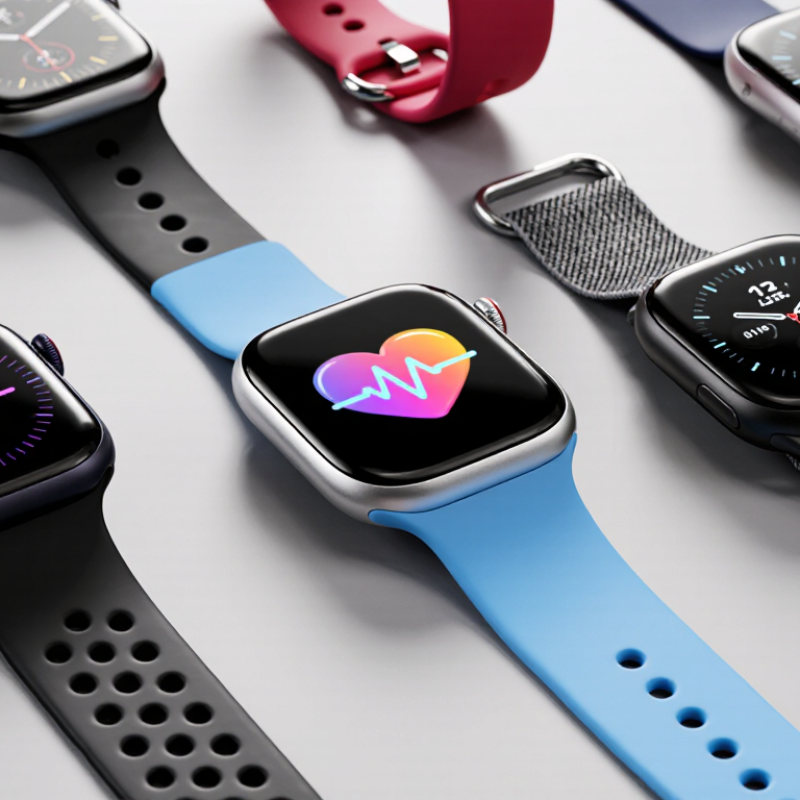
How Smartwatches Measure Heart Rate: Optical PPG, ECG, and Sensor Design
Optical PPG uses green light and photodiodes to detect tiny changes in blood volume beneath the wrist. The watch converts these pulses into a heart-rate estimate. Motion, loose fit, cold skin, and tattoos can interfere. A snug band, positioned above the wrist bone, usually helps.
ECG works differently: it reads electrical signals when a finger touches an electrode on the watch. It can capture a short rhythm tracing, but it is not the same as continuous clinical monitoring.
Sensor design matters. More LEDs or better signal filtering may improve readings, but no wrist sensor is perfect.
A 2017 Stanford-led study in the Journal of Personalized Medicine tested seven wrist-worn devices on 60 people. Six measured heart rate with less than 5% error under the study conditions; performance varied with activity. That result is useful, not a guarantee for every person or workout. Even good sensors can seem oddly confident. That deserves a second look.
Tips: Wear the watch firmly, keep its sensor clean, and wait for a steady reading before comparing results. During intervals, check trends rather than reacting to every spike. If a reading conflicts with how you feel, pause and recheck manually. Persistent symptoms need professional care.
Which Heart-Rate Metrics Matter: Resting, Workout, Recovery, and Alerts
Resting heart rate is most useful as a trend, not a verdict. Check it under similar conditions, such as after waking and before coffee. A single higher reading may reflect poor sleep, stress, heat, or a hard training day. Look for changes across several days instead. Small details matter. A loose strap or cold skin can also affect wrist readings, so compare unusual results with how you feel.
Workout heart rate shows how your body responds to effort. During a brisk uphill walk, for example, a steady rise may fit the workload; a sudden spike deserves a quick sensor check before you change plans. Recovery metrics add context. Some watches track how quickly your pulse falls after exercise, but the number varies with workout intensity, hydration, and measurement timing. It is easy to overread one score. Alerts can be useful when a device detects unusually high or low readings at rest, yet they are screening signals, not diagnoses. If an alert repeats or comes with concerning symptoms, seek advice from a qualified clinician. Wearables have limits, and even careful tracking can leave questions.
Accuracy Benchmarks: A Validation Study Found 2.4%–17.7% Heart-Rate Error
A smartwatch can show a reassuringly precise number while still missing your true pulse. In a 2017 Stanford-led validation study, wrist-based heart-rate error ranged from 2.4% to 17.7%, depending on the device. The researchers compared readings with clinical measurements across different activities. That range matters: a reading of 140 beats per minute could be off by several beats, or more. Small differences matter.
Accuracy can shift with movement. In a 2017 study in Medicine & Science in Sports & Exercise, researchers compared wrist monitors with electrocardiograms during treadmill, cycling, and elliptical workouts. Performance varied by activity and device; wrist readings were not equally dependable in every setting. A loose strap, cold skin, or a quick change in pace can also complicate a reading. Your wrist is not a lab.
For everyday tracking, look for patterns across several workouts rather than treating one number as exact. Wear the watch snugly, just above the wrist bone, and pause briefly if a reading seems implausible. These steps may help, but they cannot remove sensor error. The studies cited here tested specific devices and conditions, so their results do not guarantee the same accuracy for every watch or wearer. A useful tool, not a perfect one.
How to Compare 2026 Smartwatches by Tracking, Battery Life, and Compatibility
Compare heart-rate tracking under the conditions you actually face: a brisk walk, interval training, or a quiet night’s sleep. Optical sensors can lag during quick changes in effort, and a loose watch may show jumps that never happened. Check whether readings appear continuously, how workout summaries display peaks, and whether data exports cleanly to a health app. A controlled comparison helps: wear each watch at a similar snugness and repeat the same short workout. Small details matter. Heart-rate estimates are useful for trends, but they are not a diagnosis.
Battery life depends on settings, not just the number printed on a product page. GPS workouts, bright screens, frequent notifications, and always-on displays can shorten time between charges. Look for test results that state which features were enabled; otherwise, comparisons can mislead. Compatibility deserves equal attention. Confirm that the watch pairs with your phone’s operating system, syncs with the apps you use, and keeps useful functions when the phone is not nearby. Fit matters, too. A watch that lasts several days but feels bulky overnight may be less practical for sleep tracking. No comparison is perfectly tidy, and advertised endurance may not match a busy week.
Choosing a Watch for Fitness Goals, Health Monitoring, and Everyday Use
2026 Top Heart Rate Monitoring Smartwatches
Choosing a Watch for Fitness Goals, Health Monitoring, and Everyday Use
The best heart rate watch depends on how you plan to use its readings. For interval training, look for a clear live display, quick updates, and a secure strap that stays put during sprints. For everyday tracking, prioritize comfortable wear, readable sleep summaries, and battery life that fits your routine. Small details matter. A loose watch can produce jumpy readings, especially when your wrist is moving.
The American College of Sports Medicine’s 2025 Worldwide Fitness Trends survey ranked wearable technology as the leading fitness trend. That signals strong interest, but popularity does not guarantee precision. Wrist-based sensors can be affected by fit, motion, skin temperature, and other factors. Treat readings as useful estimates, not medical diagnoses. If a result seems unusual or symptoms concern you, seek advice from a qualified health professional. One thing is easy to miss: more charts can create more questions, not better habits.
Tips: Wear the watch snugly, just above the wrist bone, and compare readings during similar activities. Check whether it tracks the metrics you actually use. A calm walk, a sweaty hill, and a night’s sleep test different features. Don’t chase every number. Some days, the data will look odd; note the context before changing your routine.
2026 Top Heart Rate Monitoring Smartwatches - Choosing a Watch for Fitness Goals, Health Monitoring, and Everyday Use
The comparison below describes common smartwatch categories rather than specific products. Features and battery life vary by model, settings, fit, and usage; wrist-based heart-rate readings are useful for general tracking but are not a substitute for medical evaluation.
| Watch category | Best suited to | Heart-rate monitoring | Workout tracking | Typical battery range | Water resistance guidance | Main trade-off |
|---|---|---|---|---|---|---|
| Everyday health and fitness smartwatch | Daily activity, notifications, casual exercise, and general wellness trends | Wrist-based optical tracking commonly supports continuous heart-rate trends and workout readings; some models offer spot-check ECG | Workout modes are common; built-in GPS is available on many, but not all, models | About 1–3 days for feature-rich models; varies considerably with display and GPS use | Check the individual rating and swimming guidance before water use | Frequent charging may be needed; some advanced functions depend on a compatible phone |
| Running and multisport watch | Runners, cyclists, and people following structured training plans | Continuous optical heart rate, workout zones, and recovery or training summaries are common; chest-strap pairing is often supported | Sport-specific metrics and built-in satellite positioning are common; route and performance features vary | Often several days to around two weeks in watch mode; GPS workouts shorten runtime | Many models are designed for swimming, but ratings and activity limits differ | Training menus and data may be more complex than needed for casual use |
| Long-battery outdoor and adventure watch | Hiking, camping, long-distance activities, and fewer charging stops | Optical heart-rate tracking is commonly available; advanced health functions differ by model | Outdoor navigation and GPS activity tracking are common; some models offer multiple satellite systems | Often around 1–4 weeks in watch mode; continuous GPS can reduce this substantially | Look for a stated depth or ATM rating and follow the maker’s activity guidance | Typically larger, with fewer phone-style apps or a less compact design |
| Budget fitness smartwatch | Step counting, basic exercise tracking, and everyday heart-rate trends at a lower cost | Optical heart-rate tracking is common; measurement options and data detail are usually more basic | Basic workout modes are typical; GPS may rely on a paired phone rather than a built-in receiver | Often several days to about two weeks, depending on screen, notifications, and tracking settings | Water protection varies; confirm the rating before swimming or showering | Fewer advanced training, navigation, and health-monitoring features are typical |
| Health-focused smartwatch with ECG features | People who want wellness tracking plus access to selected health-monitoring functions | Optical sensors can track heart-rate trends; ECG, where available, is generally a user-initiated spot measurement, not continuous ECG | Activity tracking is common; GPS and workout analytics depend on the model | Often about 1–3 days for feature-rich designs; frequent use of health features can affect runtime | Ratings differ by model; ECG capability does not indicate suitability for water activities | ECG and other health functions may have regional, age, or phone compatibility requirements and are not a diagnosis |
Selection tip: For more consistent wrist-based readings, wear the watch snugly above the wrist bone during exercise. Optical readings can be affected by movement, fit, skin contact, temperature, and individual physiology; consider a compatible chest strap when precise workout heart-rate tracking is important.
FAQS
Check after waking, before coffee, and under similar conditions. One reading can be misleading.
Poor sleep, stress, heat, or a hard training day may raise it. A loose strap or cold skin can also affect wrist readings.
Check the sensor first. A loose watch or quick pace change may distort the reading. I might still worry too quickly.
It shows how your pulse responds to effort. During an uphill walk, a steady rise may match the workload.
One validation study found errors ranging from 2.4% to 17.7%, depending on the device. Your wrist is not a lab.
Yes. Performance varied during treadmill, cycling, and elliptical workouts. Movement matters.
They track how quickly your pulse falls after exercise. Workout intensity, hydration, and measurement timing can change the result.
No. They are screening signals. If alerts repeat or come with concerning symptoms, seek advice from a qualified clinician.
Conclusion
A Heart Rate Monitoring Smartwatch uses optical PPG sensors to estimate heart rate from changes in blood flow, while some models also offer ECG readings for a closer look at the heart’s electrical activity. Sensor placement, fit, skin contact, and movement can all affect results. Useful measures include resting heart rate, workout readings, post-exercise recovery, and alerts for unusually high or low rates; each offers a different view of daily activity and wellbeing.
No watch is perfectly accurate in every situation. One validation study reported heart-rate errors ranging from 2.4% to 17.7%, highlighting how performance can vary with activity and measurement conditions. When comparing watches, consider tracking features alongside battery life, phone compatibility, comfort, and ease of use. The best choice depends on whether your priority is fitness training, general health monitoring, or convenient everyday tracking, and readings should be treated as estimates rather than a substitute for professional medical advice.

Blog Tags: