CE Certified Remote Camera & Telematics Smartwatch Portfolio
Explore our industrial and consumer-grade smartwatches, featuring remote optical control, 4G LTE connectivity, real-time fall detection, and high-precision GPS positioning engineered for global enterprise procurement.
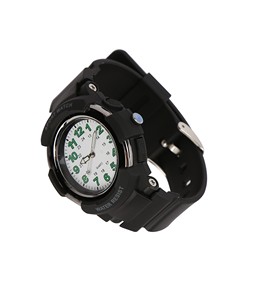
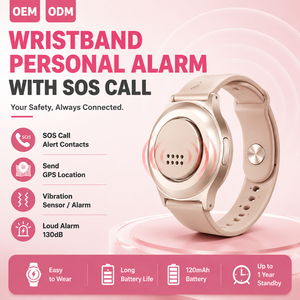
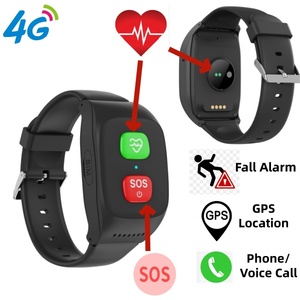
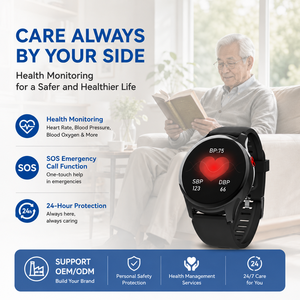
Executive Industry Report: Technical Architecture of Remote Camera Control Smartwatches
The global wearable technology ecosystem has undergone a paradigm shift from basic activity tracking toward sophisticated multi-modal telematics, biometric telemetry, and remote optical control interfaces. Within this evolving market, CE certified remote camera control smartwatches have emerged as pivotal assets for personal safety networks, enterprise lone-worker monitoring solutions, and specialized consumer electronics brands. As a tier-1 smartwatch manufacturer and contract manufacturing assembly plant operating under strict ISO 9001:2015 and ISO 13485 (Medical Devices) quality management frameworks, our R&D engineering divisions integrate advanced Bluetooth Low Energy (BLE 5.3) Human Interface Device (HID) protocols, cellular RTSP streaming APIs, and RF sub-GHz camera triggers directly into micro-form-factor wristwear.
Understanding the intent of modern B2B procurement directors requires examining the exact mechanics of remote camera control integration. A remote camera control smartwatch does not merely function as a standalone wearable; it acts as an intelligent peripheral hub capable of governing paired smartphones, action cameras, or embedded security camera modules. Whether executing discrete emergency snapshot captures during personal safety events (such as SOS triggers or senior fall alerts) or enabling convenient self-photography for consumer demographics, the stability of the wireless link, low latency response (<50ms), and power optimization are paramount.
Information Gain Insight: Unlike standard off-the-shelf consumer wearables that rely solely on simple media key emulation, industrial-grade remote camera control smartwatches utilize customized BLE GATT profiles paired with firmware-level image compression. This architecture allows dual-mode functionality: local camera trigger execution via GATT commands and automated cloud transmission over 4G LTE CAT-1/CAT-M1 networks when fall sensors or 130dB panic alarms are activated.
CE Certification Demystified: EU Regulatory Compliance & Standard Specifications
For international buyers importing wearable technology into the European Economic Area (EEA), regulatory compliance under the CE Marking framework is a mandatory legal pre-requisite. Compliance guarantees that smartwatches conform to European standards for radio frequency emission, electromagnetic compatibility (EMC), user safety, and hazardous material restriction. Our manufacturing facilities execute exhaustive testing procedures to satisfy every arm of the CE directive ecosystem:
RED Directive 2014/53/EU
Full compliance for 4G LTE, 3G, GSM, Wi-Fi, GPS, and BLE 5.3 spectrum usage. Rigorous Specific Absorption Rate (SAR) testing according to EN 50566 ensures zero radiation hazard to human tissue during prolonged contact.
EMC & Electrical Safety
Tested against EN 301 489-1/-17/-52 standards for immunity against electromagnetic interference, static discharge (ESD up to 8kV/15kV), and EN 62368-1 electrical safety for integrated Lithium-ion Polymer batteries.
RoHS 2.0 & REACH Chemical Safety
Strict prohibition of hazardous substances under Directive 2011/65/EU and Regulation (EC) No 1907/2006. Hypoallergenic medical TPU straps, lead-free SMT soldering, and heavy-metal-free enclosure plating.
Comparative Engineering Specification Matrix: Smartwatch Telematics Categories
To assist corporate procurement managers, OEM brand buyers, and IoT system integrators, the table below provides a comprehensive structural breakdown of our CE-certified smartwatch hardware lines.
| Product Architecture | Primary Processor & RF Chipset | Remote Camera Control Protocol | Location & Sensor Suite | CE Certification Standards | Target B2B Application |
|---|---|---|---|---|---|
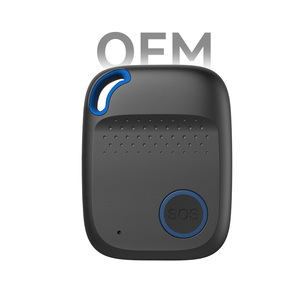
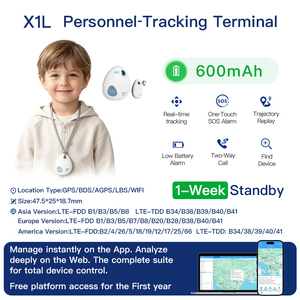
| Kids Anti-Lost Tracker Series | Nordic nRF52840 / ASR3603 LTE | BLE GATT Remote Shutter API | Apple Find My Network / GPS / LBS / Wi-Fi | CE RED, EN 62368-1, EN 50566 SAR | Retail Brands, School Safety Networks |
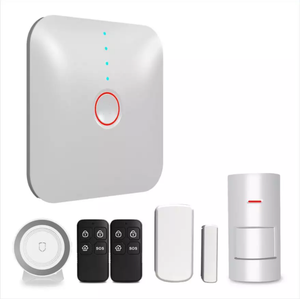
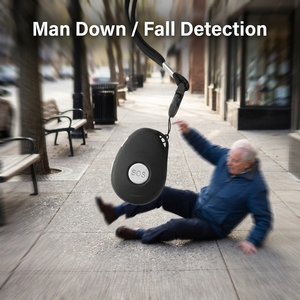
| 130dB Alarm & Fall SOS Series | Realtek RTL8762D + ASR 4G Modem | Dual BLE HID & Automated Cloud Burst Capture | 3-Axis Gyroscope, Fall Detection, 130dB Siren | CE RED, EMC EN 301 489, RoHS 2.0 | Senior Care Agencies, Lone Worker Safety |
| 4G Senior Telehealth PERS Watch | UNISOC 8910DM / MTK6739 | Remote Mobile App Shutter & Video Telemetry | GPS + Beidou, PPG Heart Rate, SpO2, Temp | CE RED, ISO13485 Biocompatibility | Telehealth Providers, Healthcare B2B |
| 4G Waterproof Pendant / Watch Hybrid | ASR3603 Core / Low-Power MCU | Bluetooth Remote Media Controller | Geofencing, Panic SOS, Fall Alert, IP68 Waterproof | CE RED, IP68 Ingress Protection Test | Security Operations, Remote Asset Tracking |
Future Procurement Trends in Remote Camera Control Smartwatches (2025–2030)
Global buyer requirements are shifting rapidly from static hardware procurement to dynamic hardware-as-a-service (HaaS) integration. Based on extensive market telemetry and operational feedback from over 200 global distributors across North America, Europe, and the Asia-Pacific region, several critical technological trends will dictate smartwatch procurement over the next decade.
1. Dual-Chip System Architectures for Extreme Battery Longevity
Legacy 4G smartwatches suffered from excessive power dissipation, resulting in 18 to 24-hour battery endurance. Modern OEM factories are migrating to dual-processor platform architecture. A low-power MCU handles background BLE 5.3 connection, remote camera control triggers, and sensor polling, while a secondary high-performance cellular SoC powers up strictly during 4G voice calls, video transmission, or cloud data syncing. This innovation boosts standby battery longevity to over 7–10 days on a single 680mAh–950mAh cell.
2. OpenAPI & SDK-Driven Customization for Enterprise Integrators
Enterprise clients no longer want locked software stacks. Future-proof smartwatch factories must offer customizable Android/RTOS firmware along with flexible SDKs. These allow enterprise software providers to bind the smartwatch's physical buttons or remote camera trigger commands directly to proprietary enterprise mobile apps, hospital management systems, or security dispatch software.
3. Camera Control as an Automated Safety Verification Tool
Beyond personal leisure photos, remote camera trigger technology is being repurposed as a critical safety feature. In lone worker environments or senior care, triggering an emergency SOS button can automatically send a command to a linked camera system or activate a wrist-mounted micro camera module to record short snapshot bursts. This provides immediate visual context to emergency dispatchers, drastically reducing false alarm responses.
4. Eco-Design & Circular Economy Mandates in the EU
With upcoming EU regulations enforcing modular repairability, recycled aluminum cases, bio-based TPE wristbands, and PVC-free packaging, smartwatch factories must adapt their supply chains. Sourcing from CE certified manufacturers that adhere to ISO 14001 environmental standards ensures compliance with future European sustainability benchmarks.
Why CE Certified Remote Camera Control Manufacturing Demands In-House SMT Assembly
Precision manufacturing of ultra-compact wearable devices requires strict environmental controls, specialized automated testing equipment, and complete supply chain transparency. A failure in RF antenna tuning or sub-par battery shielding can disrupt BLE remote camera trigger signals and cause SAR radiation non-compliance under EU CE testing.
Our manufacturing facility houses 8 high-speed Panasonic SMT production lines, 10,000-class dust-free optical assembly cleanrooms, and dedicated RF anechoic chambers. Every remote camera control smartwatch undergoes 100% automated optical inspection (AOI), 4-stage functional testing, multi-axis drop tests, and IP68 waterproof chamber pressure testing to ensure flawless performance in field conditions.
Technological Roadmap: Engineering Next-Generation Smartwear Solutions
Building high-performance smartwatches requires harmonizing hardware, firmware, and cloud software. As a factory partner for leading global watch brands, our engineering roadmap focuses on three foundational technological pillars:
1. Advanced Sensor Fusion Algorithms
Integrating optical PPG sensors, 3-axis accelerometers, bio-impedance sensors, and skin temperature thermistors into unified AI-driven motion engine software. This enables high-precision fall detection while mitigating false positives caused by routine daily activities.
2. Low-Latency Remote Camera Protocol Engine
Engineered to support iOS Camera API, Android Camera2 API, and custom RTMP/RTSP camera streaming protocols. Wireless trigger commands are transmitted via encrypted AES-128 BLE packets, delivering sub-50ms execution speed without draining smartphone or watch batteries.
3. Robust Hardware Reliability Engineering
Utilizing high-impact polycarbonate cases, aviation-grade aluminum bezels, drop-resistant glass lenses, and ultrasonic welding. Our devices are built to withstand severe physical shock, dust exposure, and water immersion down to 50 meters (5ATM/IP68 rating).
Comprehensive Procurement FAQ: OEM/ODM Sourcing & Technical Integration
We have compiled answers to key technical, regulatory, and supply chain questions raised by enterprise buyers, procurement teams, and brand managers evaluating our smartwatch manufacturing capabilities.
Our smartwatches support two primary remote camera control mechanisms. First, via a standard Bluetooth HID (Human Interface Device) profile, the smartwatch acts as a wireless shutter release that communicates directly with paired iOS and Android native camera applications without requiring custom third-party software. Second, for specialized enterprise and personal safety applications, our firmware supports dedicated API integration. When triggered (via a physical button or automated SOS event), the watch sends an encrypted control command over BLE or 4G LTE to trigger a silent snapshot capture, video recording burst, or cloud photo upload via a linked mobile app or management server.
Every smartwatch model exported to the European market is delivered with a complete CE Declaration of Conformity (DoC) supported by official test reports from accredited NB (Notified Body) laboratories. This includes RED Directive 2014/53/EU test reports for RF spectrum efficiency, EN 301 489 series EMC test reports, EN 62368-1 safety certification, EN 50566 SAR (Specific Absorption Rate) compliance reports, RoHS 2.0 (2011/65/EU) hazardous chemical testing, and REACH SVHC chemical screening. This documentation guarantees frictionless customs clearance at European ports.
For standard white-label hardware with customized brand packaging, laser-engraved logos, and custom boot animations, our standard MOQ starts at 1,000 units per model. For deep ODM projects—which involve custom tooling design, PCB redesign, specialized sensor integration, or proprietary firmware protocol development—our project entry threshold starts at 3,000 to 5,000 units, depending on the complexity of the hardware modifications.
Yes. The sensitivity thresholds of our 3-axis/6-axis accelerometer fall detection algorithms are fully configurable at the firmware level to match your specific target demographic (e.g., elderly care facilities, high-risk industrial workers, or active outdoor consumers). Similarly, the duration, frequency, and activation sequence of the 130dB personal safety siren can be adjusted via software parameters or set to trigger silently alongside a remote camera snapshot.
Our 4G GPS smartwatches employ multi-constellation hybrid positioning engines that combine GPS, GLONASS, Beidou, and Galileo satellite networks with secondary Wi-Fi hot-spot positioning and LBS cell-tower triangulation. Indoors, where GPS satellite signals are obstructed, the watch seamlessly transitions to Wi-Fi MAC address scanning and LBS positioning. This multi-layered tracking framework achieves outdoor positioning precision within 2.5 to 5 meters and indoor accuracy within 10 to 25 meters.
Quality control is integrated into every phase of manufacturing. Every production lot undergoes a 5-step Quality Gate process: 1) IQC (Incoming Quality Control) for component testing; 2) SMT Solder Paste Inspection and 3D AOI testing; 3) IPQC (In-Process Quality Control) functional board-level testing; 4) 100% 72-hour thermal aging and burn-in testing; and 5) FQC (Final Quality Control) including IP68 water chamber pressure tests, micro-drop shock tests, button actuation lifetime testing (50,000+ presses), and RF power output validation in anechoic chambers.
Absolutely. Our 4G and BLE smartwatch platforms support open API and MQTT/HTTP/TCP/UDP network protocols. We supply full server communication documentation, SDK libraries for Android and iOS development, and custom payload formatting. Enterprise clients can easily route location coordinates, biometric health vitals, SOS alerts, and remote camera trigger status updates directly to their proprietary cloud servers or emergency response monitoring platforms.
Enterprise Core Competencies & Global Manufacturing Leadership
Leveraging over 30 years of horological engineering expertise and electronic manufacturing lineage, our company bridges the gap between traditional watchmaking craftsmanship and cutting-edge wearable IoT technology. Trusted by world-class retailers, tier-1 telecommunications carriers, and specialized healthcare brands across more than 50 countries, we provide turnkey OEM/ODM contract manufacturing services tailored to complex commercial requirements.
End-to-End R&D Engineering
Our in-house R&D team consists of over 60 hardware designers, RF tuning specialists, embedded RTOS/Android firmware developers, and iOS/Android app engineers. We transform initial conceptual sketches into fully certified, mass-production-ready smartwatches within 60 to 90 days.
Modern ISO 9001 / ISO 13485 Facilities
Our manufacturing complex spans over 15,000 square meters, equipped with high-speed automated SMT assembly lines, cleanroom optical displays integration rooms, automated waterproofing test stations, and rigorous environmental stress testing chambers.
Global Supply Chain Management
We maintain direct strategic partnerships with leading semiconductor foundries, chipset manufacturers (Nordic, Realtek, UNISOC, ASR), and sensor fabricators. This guarantees stable component pricing, priority allocation during global chip shortages, and reliable volume delivery timelines.
Initiate Your OEM/ODM Smartwatch Project Today
Whether you are expanding your consumer electronics catalog with CE-certified remote camera control smartwatches, engineering a custom personal safety PERS system, or seeking a reliable white-label manufacturing partner, our technical engineering team is ready to assist. Contact our B2B procurement specialists for hardware samples, factory audits, and complete technical specifications.