Featured CE-Certified Smartbands & Safety Trackers
Engineered for medical monitoring, pediatric safety, senior care, and personal emergency response systems (PERS). Fully customizable for OEM/ODM global distributors.
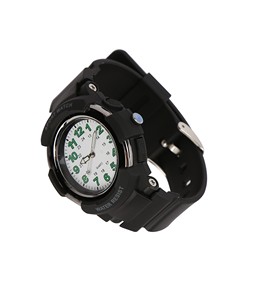
Kids Anti-Lost Smartwatch Compatible with Apple Find My & Android Dual Systems
Inquire Now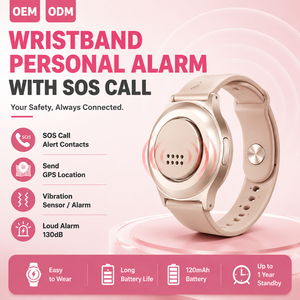
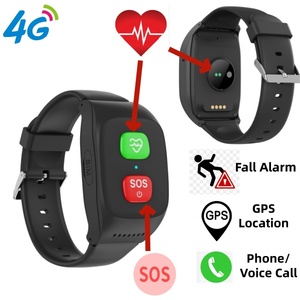
4G Senior Smart Watch with GPS Tracking, Heart Rate & Fall Detection
Inquire Now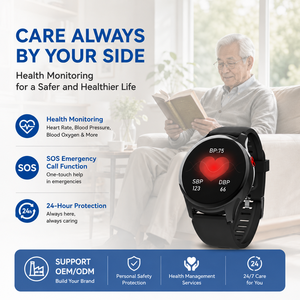
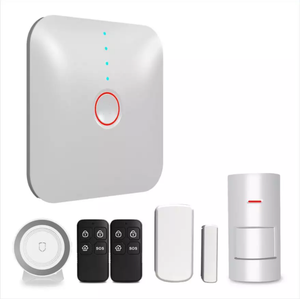
Wireless Medical Alert Emergency Senior Watch for Telehealth Systems
Inquire Now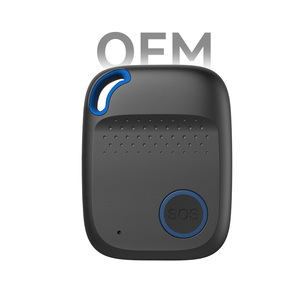
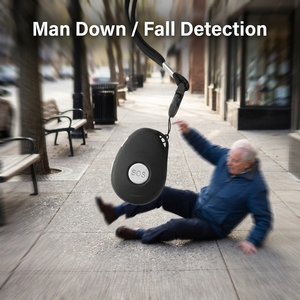
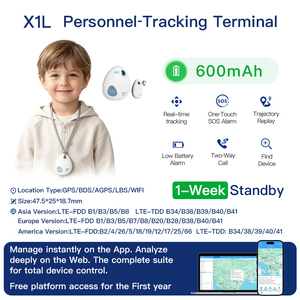
Wholesale Waterproof GPS Locator Smartband with GSM/WiFi Triangulation
Inquire NowGlobal Smartband Manufacturing Excellence & CE Engineering Standards
As a premier CE Certified Temperature Monitoring Smartband Factory and Original Equipment Manufacturer (OEM), our enterprise operates at the intersection of medical micro-electronics, biosensor calibration, and cloud-connected wireless infrastructure. Backed by over three decades of precision horological and electronic manufacturing heritage (headquartered in New York with automated surface-mount technology facilities worldwide), our organization engineers enterprise-grade wearables trusted by tier-one healthcare providers, global retail chains, and state safety agencies across 50+ countries.
In the rapidly evolving landscape of remote patient monitoring (RPM) and personal wellness telemetry, achieving true CE Marking (Conformité Européenne) compliance requires rigorous adherence to European Union health, safety, and environmental protection standards. Our temperature monitoring wristbands undergo exhaustive validation under the Radio Equipment Directive (RED) 2014/53/EU, Electromagnetic Compatibility (EMC) Directive 2014/30/EU, and Restriction of Hazardous Substances (RoHS) 2011/65/EU. Furthermore, our clinical biosensing modules are designed to integrate seamlessly into environments regulated by the EU Medical Device Regulation (MDR 2017/745).
Biosensor Physics: High-Precision Body Temperature Measurement
Accurate physiological thermal sensing via wrist-worn form factors presents significant bio-engineering challenges. Skin temperature ($\text{T}_{\text{skin}}$) is inherently variable, subject to ambient thermal drift, vascular micro-perfusion, and conductive dissipation. Standard consumer-grade accelerometers or uncalibrated infrared sensors frequently introduce variances as high as $\pm 1.5^\circ\text{C}$, rendering them unusable for clinical triage or early fever detection.
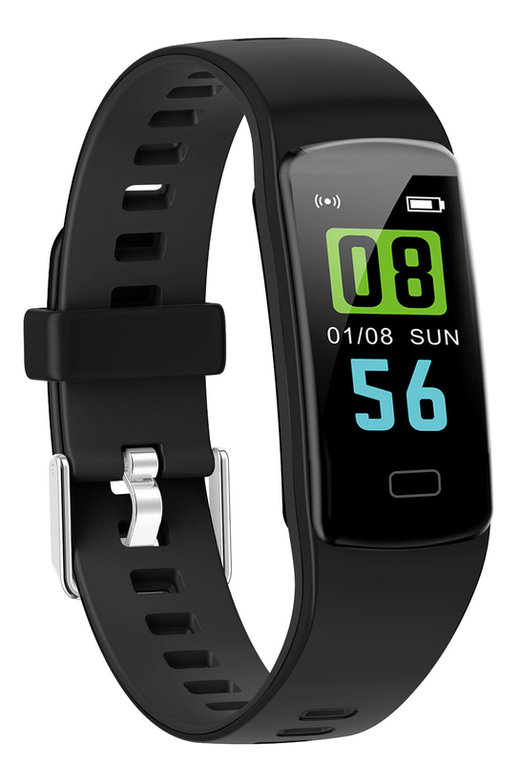
Dual-Sensor Thermal Array Architecture
1. Direct Epidermal Contact Plate: Constructed from medical-grade 316L stainless steel or hypoallergenic electro-plated titanium alloys, ensuring zero thermal resistance and skin biocompatibility (ISO 10993 compliant).
2. High-Sensitivity NTC Thermistor: Features a high-B-constant semiconductor resistor capable of detecting temperature variations down to $0.01^\circ\text{C}$ within a response time of $< 15\text{ seconds}$.
3. Dynamic Ambient Noise Filtering: An auxiliary environmental sensor measures external air temperature. The embedded SoC applies Kalman-filter smoothing to dynamically eliminate cold/hot draft distortion.
Technical Comparison: NTC Contact Sensors vs. Contactless IR Micro-Sensors
| Performance Metric | Factory Contact NTC Thermistor (Our Standard) | Generic Contactless Infrared Sensor | Standard PPG Optical Emulation |
|---|---|---|---|
| Measurement Precision | ±0.1°C (Clinical Grade) | ±0.5°C to ±1.0°C | Unreliable (Estimated) |
| Ambient Thermal Immunity | High (Dual-Vector Compensated) | Low (Vulnerable to sunlight/airflows) | N/A |
| Battery Consumption | Ultra-Low (<0.05mA per reading) | Medium to High | High (Continuous LED firing) |
| Continuous 24/7 Monitoring | Seamless Passive Logging | Requires Manual Pointing/Triggering | Intermittent Spot-Checks |
| CE RED & Medical Compliance | Fully Certified (EN 60601-1-2 / EN 12470-3) | Varies by casing isolation | Non-Medical Consumer Status |
Future Procurement Trends for Temperature Smartbands & Telemetry Systems
As enterprise procurement buyers, government healthcare agencies, and global B2B brands evaluate their supply chains for 2025–2030, the market for thermal sensing wearables is undergoing a massive shift from simple consumer step-trackers toward multi-modal diagnostic telematics. Factory buyers must align their product roadmaps with four critical sourcing macro-trends:
1. Telehealth & RPM API Integration
Modern healthcare networks no longer accept isolated hardware. Future procurement tenders mandate raw Bluetooth SDKs, MQTT server pipelines, and HIPAA/GDPR-compliant cloud REST APIs allowing smartbands to push temperature alerts straight to hospital EMR systems.
2. Rigorous EU & US Regulatory Gates
Customs inspections in Europe and North America have intensified. Importers must ensure their manufacturing partner holds valid CE EMC/RED certificates, FCC ID documentation, RoHS hazardous material testing, and UN38.3 lithium battery transport compliance.
3. Hybrid Connectivity (BLE 5.3 + 4G LTE-M)
While short-range BLE 5.3 powers localized smartband-to-smartphone sync, senior care and lone-worker safety procurement requires standalone 4G LTE-M / NB-IoT connectivity with embedded eSIMs for direct emergency SOS and geolocation reporting.
Smartband Technology Evolution & Factory Innovation
Our engineering laboratory in OEM manufacturing continues to push the boundaries of wearable biometrics. Over the next 24 months, our smartband development matrix centers around three primary technological breakthroughs:
• Multi-Biometric Fusion Engines: Integrating temperature thermistors with optical Photoplethysmography (PPG) arrays for simultaneous monitoring of Blood Oxygen Saturation ($\text{SpO}_2$), Arterial Pulse Wave Index, continuous Heart Rate Variability (HRV), and micro-dermal temperature fluctuations.
• Edge AI Predictive Health Analytics: Transitioning from passive data logging to proactive on-device machine learning models. Embedded Nordic nRF52840 and Realtek microcontrollers process baseline body temperature curves to alert users of potential fever onset or circadian rhythm disruptions hours before physical symptoms manifest.
• Ultra-Low Power Co-Processors & Fast Magnetic Charging: Leveraging advanced 55nm silicon architectures that reduce standby power draw, yielding continuous 14-day battery life even with continuous 24/7 temperature interval scanning.
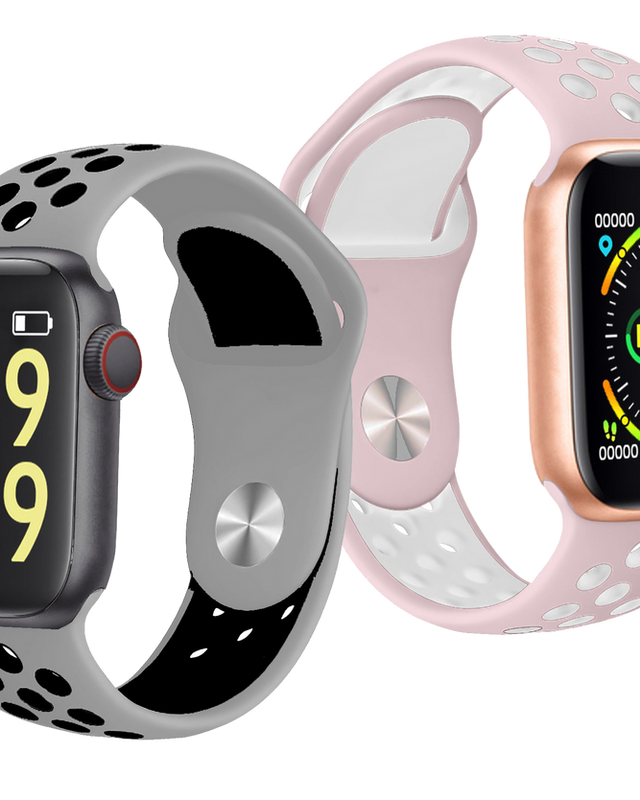
Factory Advantages & Turnkey OEM/ODM Capabilities
Streamlined manufacturing solutions from industrial design, tooling development, and PCB layout to international regulatory certification and global drop-ship fulfillment.
Full Customization (White-Label)
Complete logo laser engraving, custom silkscreen straps, bespoke UI theme design, personalized packaging boxes, and customized firmware boot-up logos for corporate clients.
Global Telecom Certifications
Our 4G and BLE smartbands are pre-certified for global carriers across Europe (CE RED), North America (FCC/PTCRB), and Asia-Pacific, ensuring zero customs roadblocks.
Rigorous Automated QA & QC
Every smartband batch undergoes 100% automated water-immersion pressure testing (IP68), thermal calibration chamber validation, drop tests, and battery burn-in cycles.
Frequently Asked Questions (FAQ) for B2B Sourcing
Q What specific CE certifications are provided with your temperature monitoring smartbands?
Our temperature monitoring smartbands come with full European Conformity documentation, including CE-RED (Radio Equipment Directive 2014/53/EU), CE-EMC (EN 301 489 series for electromagnetic compatibility), EN 62479 (RF exposure safety), and EN 62368-1 (electrical product safety). Complete test reports from accredited third-party laboratories (such as SGS and TÜV Rheinland) are available to wholesale partners upon signing an NDA or placing a sample order.
Q How does your factory verify temperature sensor calibration before shipment?
During assembly, 100% of smartband PCBs are routed through automated constant-temperature liquid immersion baths and calibrated thermal chambers. The NTC thermistors are calibrated against a high-precision reference thermometer ($\pm 0.01^\circ\text{C}$ laboratory master) across three thermal setpoints ($35.0^\circ\text{C}$, $37.0^\circ\text{C}$, and $39.0^\circ\text{C}$). Calibration offset parameters are permanently flashing into the microcontroller's EEPROM.
Q What is the Minimum Order Quantity (MOQ) for OEM/ODM custom orders?
For standard factory-neutral inventory with custom laser etching or branded box packaging, our standard MOQ starts at 500 units. For fully customized OEM orders involving custom injection-molded strap colors, customized PCB layouts, bespoke firmware development, or custom mobile application white-labeling, our standard MOQ is 1,000 to 3,000 units depending on the complexity of hardware modifications.
Q Do you offer mobile app SDKs or direct cloud API integrations for healthcare platforms?
Yes. We provide comprehensive native iOS (Swift/Objective-C) and Android (Java/Kotlin) Software Development Kits (SDKs) complete with sample code and developer documentation. Our SDK enables seamless Bluetooth Low Energy (BLE) pairing, background temperature data sync, real-time alert triggers, and raw data export to third-party AWS/Azure health clouds or hospital Telehealth dashboards.
Q What is the production lead time for bulk wholesale orders?
Sample evaluation units are dispatched within 2 to 4 business days. Standard production lead time for customized bulk orders (1,000 to 10,000 units) is typically 21 to 30 calendar days post sample sign-off and deposit receipt. Expedited manufacturing lines can be arranged for high-priority contract tenders.
Q What is your quality warranty and Return Merchandise Authorization (RMA) policy?
We provide a standard 12-month factory warranty on all smartband electronics, sensors, and battery modules. Defective units falling within warranty terms are replaced directly or credited toward your next production cycle. Our historical factory defect rate remains strictly below 0.3% due to our rigorous 5-stage automated quality assurance protocol.