OEM/ODM Certified Medical & Safety Smartwatches
Explore our state-of-the-art medical-grade wearables, elderly PERS (Personal Emergency Response Systems), lone-worker trackers, and kids safety devices engineered for global healthcare buyers, telecom operators, and brands.
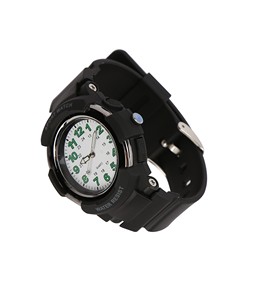
Kids Anti-Lost Smart Watch with AirTag Compatibility & Dual-System Tracking
- Dual Network Positioning (Apple Find My + Android)
- Hypoallergenic Silicone & Ergonomic Design
- Real-Time Geofencing & Proximity Alert
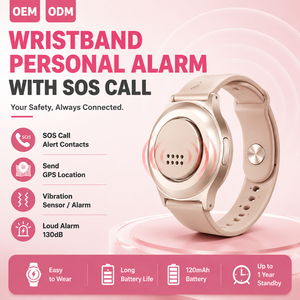
130dB Safe Sound Personal Safety Alarm Watch with GPS & Automatic Fall Detection
- 130dB Acoustic Siren + SMS/Call Alert Trigger
- High-Precision 6-Axis Accelerometer Fall Sensor
- IP67 Waterproof Ruggedized Enclosure
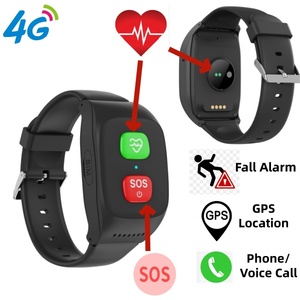
4G Senior Medical Alert Smartwatch with Continuous PPG Heart Rate & Fall Detection
- 4G VoLTE Two-Way Cellular Voice Calling
- Optical PPG Sensor for 24/7 Cardiac Monitoring
- Dedicated One-Touch SOS Emergency Button
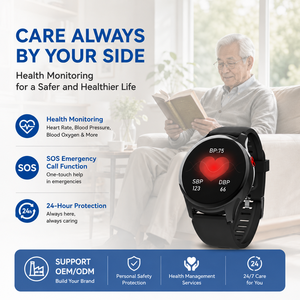
4G Multi-Constellation GPS + BeiDou Senior Tracker with 680mAh Battery
- GPS / BeiDou / LBS / Wi-Fi Quad Positioning
- High-Density 680mAh Lithium Polymer Battery
- Geo-Fence Ingress/Egress Instant Notification
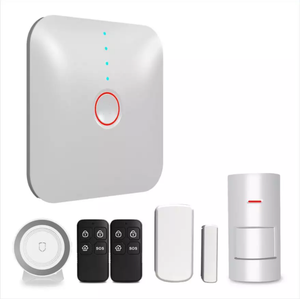
Wireless Medical Alert Telehealth Watch with Emergency PERS Telemetry
- Institutional Telehealth Platform SDK Integration
- Automatic Impact Detection Algorithm
- Bi-Directional Hands-Free Speakerphone
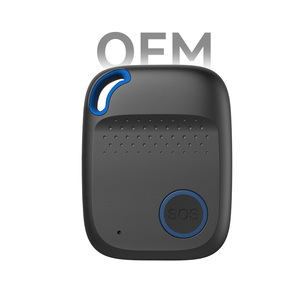
4G LTE PERS & Lone Worker Industrial Safety Watch with 950mAh Battery
- Extended Capacity 950mAh Power Cell
- Man-Down & Motionless Detection System
- Enterprise IoT Fleet Portal Connectivity
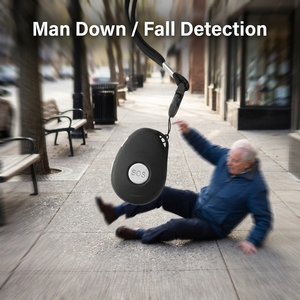
Modular 4G Waterproof GPS Panic Alarm Pendant with Watch Case Conversion
- Multi-Form Factor (Wristband, Pendant, Keychain)
- IP68 Full Immersion Waterproof Standard
- Instant Emergency Call Out Protocol
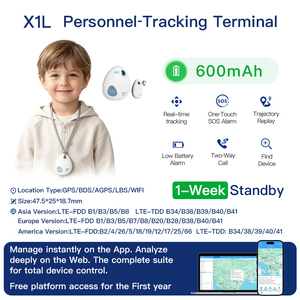
Multi-Network Medical Locator with Wi-Fi Indoor Triangulation & Low-Power GPRS
- Wi-Fi Mac Sniffing for Indoor Location Pinpointing
- Ultra-Low Power Consumption Firmware
- Complete White-Label SaaS Server Integration
The Anatomy of Medical-Grade Smartwatch Manufacturing in China
As the global healthcare landscape rapidly shifts toward remote patient monitoring (RPM), preventative clinical care, and decentralized health systems, the market demand for medical-grade health smartwatches has expanded exponentially. China has solidified its position as the premier international hub for advanced wearable micro-electronics OEM/ODM production. However, transitioning from consumer-grade fitness trackers to clinically validated medical wearables requires stringent engineering standards, precision sensor calibration, and robust compliance frameworks.
Leading Chinese wearable manufacturers now integrate state-of-the-art SMT (Surface Mount Technology) cleanrooms, automated optical inspection (AOI) lines, and ISO 13485 certified quality management systems. Medical-grade smartwatches differ fundamental from consumer smart bands across three critical dimensions: optical sensor signal-to-noise ratio (SNR), algorithmic motion artifact suppression, and regulatory data integrity (FDA 21 CFR Part 11 and GDPR compliance).
Multi-Wavelength Optical Photoplethysmography (PPG)
Utilizing high-sensitivity multi-LED arrays emitting green (525nm), red (660nm), and infrared (940nm) spectrums to penetrate skin micro-vasculature, providing continuous heart rate, heart rate variability (HRV), and real-time oxygen saturation (SpO2) readings with high clinical correlation.
Sub-Surface Micro-Thermistor Temperature Sensing
Integrating medical NTC thermistors and non-contact infrared thermal sensors calibrated via blackbody radiation systems, enabling continuous body temperature tracking accurate to within ±0.1°C for early fever detection and physiological stress tracking.
6-Axis Inertial Measurement & Fall Detection AI
Combines 3-axis acceleration and 3-axis gyroscopic data through proprietary machine learning models. Accurately distinguishes between routine daily movements (e.g., sitting down, dropping an object) and high-impact freefall emergency events.
For B2B buyers, institutional health procurement agencies, and private label importers, selecting an established Chinese manufacturing partner ensures access to scaled supply chains, competitive bill-of-materials (BOM) cost structures, and extensive hardware customizability without compromising clinical accuracy.
Bio-Sensor Architecture & Telehealth SDK Integration
The true technical differentiator of top-tier health smartwatches lies in the signal-processing pipeline and software SDK stack. Consumer wearables often rely on basic wrist movement algorithms that produce significant motion artifacts during exercise or ambient vibration. Medical-grade wearables manufactured by top Chinese factories incorporate hardware-level analog front-end (AFE) chips (such as Analog Devices or Texas Instruments medical AFEs) coupled with customized firmware filters.
1. Electrocardiogram (ECG) and Single-Lead Measurement
By placing stainless steel or titanium dry electrodes on the smartwatch bezel and back case, the wearable forms a closed circuit across the user's chest (Lead I ECG configuration). The raw microvolt electrical signals generated by cardiac depolarization are amplified, filtered through high-pass and low-pass notch filters to remove 50Hz/60Hz powerline noise, and processed to detect Atrial Fibrillation (AFib), Premature Ventricular Contractions (PVCs), and sinus rhythm irregularities.
2. Cellular PERS & Fall Emergency Protocol Architecture
Personal Emergency Response Systems (PERS) built into senior smartwatches must guarantee zero-latency connectivity during emergencies. Modern 4G LTE Cat-M1 and NB-IoT architectures enable low-power cellular connectivity directly from the wrist without requiring a paired smartphone. When a fall impact is detected, the wearable executes a multi-tiered communication cascade:
| Emergency Stage | System Action & Protocol | Hardware Component Triggered |
|---|---|---|
| Stage 1: Pre-Alert Countdown | 15-second localized acoustic & haptic vibration warning allowing manual cancellation if false alarm occurs. | 130dB Piezo Siren & Linear Resonant Actuator (LRA) Haptic Motor |
| Stage 2: Multi-Constellation Lock | Simultaneous GPS, BeiDou, GLONASS, and Wi-Fi MAC address scanning to pinpoint precise latitude/longitude within 3 meters. | GNSS Chipset + Wi-Fi Positioning Module |
| Stage 3: Telehealth Dispatch Call | Initiates direct VoLTE voice call to emergency dispatch or family contacts while broadcasting encrypted telemetry. | 4G Module, Noise-Canceling Dual Microphone & HD Speaker |
| Stage 4: Cloud API Push | Sends MQTT/HTTPS JSON payload to central nursing station or SaaS platform containing real-time vitals and GPS history. | Secure TLS 1.3 Enterprise Cloud API Push |
Future Procurement & Technology Trends in Medical Wearables (2025–2030)
Procurement directors and product managers evaluating Chinese smartwatch manufacturing partners must align their hardware roadmaps with emerging global health technology trends. Over the next five years, the global medical smartwatch sector will be defined by five pivotal shifts:
1. Continuous Non-Invasive Blood Pressure (NIBP) Monitoring: Moving away from bulky inflatable cuffs, upcoming health smartwatches leverage Photoplethysmography Pulse Transit Time (PTT) algorithms and optical pressure sensors to derive relative continuous blood pressure trends. Early adopters among OEM buyers are already launching PTT-enabled models with high market success.
2. Hybrid Cellular Low-Power Protocols (LTE Cat-1 bis & NB-IoT): To replace sunsetting 2G/3G networks worldwide, modern senior smartwatches are built on single-antenna LTE Cat-1 bis chipsets. This drastically reduces PCB footprint, cuts manufacturing costs by 20%, and lowers battery consumption while supporting global 4G bands.
3. Decoupled Hardware-SaaS Platforms: Leading Chinese manufacturers are transitioning from simple hardware sellers to total solution providers. Modern contract manufacturing contracts include white-label iOS/Android SDKs, RESTful cloud APIs, and turnkey SaaS dashboards, allowing healthcare buyers to deploy branded remote patient monitoring systems overnight.
4. Advanced Bio-Compatible Materials: High-end medical wearables utilize medical-grade liquid silicone straps, anti-allergenic 316L stainless steel cases, and sapphire crystal glass displays to prevent contact dermatitis during 24/7 continuous wrist wear by elderly or pediatric patients.
5. Energy Harvesting & High-Density Anode Batteries: Battery longevity remains the primary bottleneck for continuous monitoring. The integration of silicon-anode battery technology provides up to 40% higher energy density, enabling 7 to 14 days of continuous operation even with background GPS and heart-rate tracking activated.
Manufacturer Evaluation Framework: Vetting China OEM/ODM Suppliers
When conducting supplier audits for medical-grade smartwatch production in Shenzhen, Dongguan, or broader Guangdong tech clusters, international procurement executives should evaluate potential contract manufacturers using the following core criteria:
Regulatory & Medical Certifications
Ensure the facility holds authentic ISO 13485 QMS certification for medical devices, alongside ISO 9001. Hardware products should be pre-certified or designed for seamless FDA 510(k), CE MDR Class IIa, FCC, and RoHS compliance.
In-House Testing & Reliability Labs
Verify that the factory operates dedicated testing labs equipped with thermal shock chambers, drop-test towers, ESD static testers, salt-spray corrosion chambers, and IP68 water immersion pressure tanks.
Firmware Customization & SDK Openness
Assess the manufacturer's software engineering strength. Top exporters provide comprehensive Bluetooth Low Energy (BLE) protocols, MQTT integration guides, and custom ROM tailoring for enterprise software environments.
Frequently Asked Questions (B2B Sourcing & Technical FAQ)
Ready to Scale Your Medical Smartwatch Line?
Partner with China's leading OEM/ODM health wearable manufacturer. Access full catalog pricing, engineering data sheets, and sample evaluation units today.