Custom Firmware Smart Wearables & Telemetry Devices
Engineered for global wholesalers, health system integrators, brand owners, and telecare providers. Available for deep RTOS, MCU kernel, and cloud server customization.
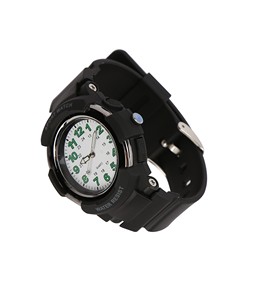
Kids Anti Lost Smart Watch With Airtag Compatible With Apple Find My and Android Dual System Tracker Bracelet
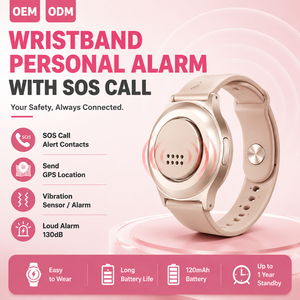
130DB Safe Sound Personal Safety Alarms SOS Watch With GPS Location SMS Call Trigger Outdoor Fall Alert For Elderly Women Kids
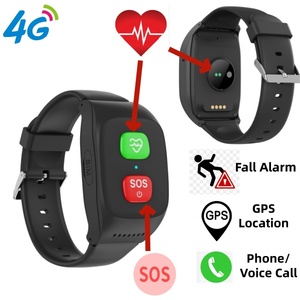
4G Elderly Smart Watch With GPS Tracker Phone Call Heart Rate Monitor Waterproof Fall Detection Device Senior SOS Watch Bracelet
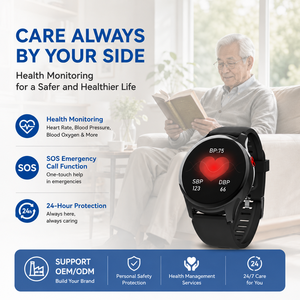
Elderly GPS Tracker Smart Watch 4G Waterproof with SOS Button Beidou Positioning Geofencing 680mAH
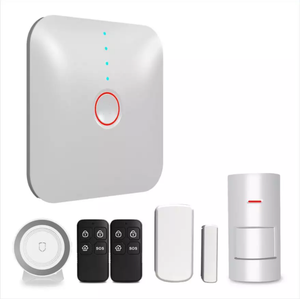
Wireless Sos Medical Alert Phone Emergency Senior Watch 4g Gps Sos Alarm Personal Emergency System Elderly Care Fall Down Alert
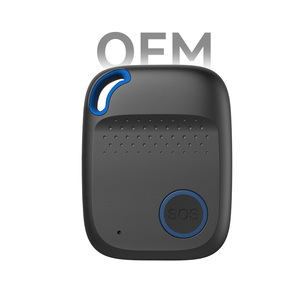
4G LTE PERS Lone Worker Senior Assistance Fall Alarm GPS Tracker 950mAh Two Way Calling Medical Alarm Emergency SOS Button
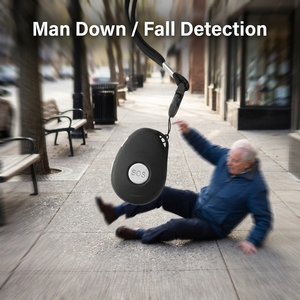
4G Waterproof GPS Tracking Pendant With SOS Panic Button Personal Alarm With Watch Case and Keychain
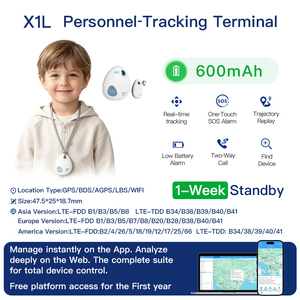
Wholesale Supply Waterproof GPS Elderly/Kids Locator SOS Emergency Call Button 1-Year GPRS Tracking GSM/WiFi Positioning
Executive Summary: The Strategic Imperative of Custom Firmware in Wholesale Smart Wearables
In the modern Internet of Medical Things (IoMT), Personal Emergency Response Systems (PERS), and consumer smart wearable industries, hardware commoditization has shifted the locus of competitive advantage toward custom firmware, proprietary kernel integration, and algorithmic sensor optimization. Global B2B buyers, institutional healthcare distributors, and telecommunication brands sourcing smartwatches and GPS tracking pendants from China no longer evaluate suppliers merely on plastic molds or screen resolutions. Instead, procurement directors prioritize low-level RTOS customization, security protocol implementation, private cloud socket binding (MQTT/HTTPS/CoAP), and battery optimization algorithms.
China's smart wearable manufacturing ecosystem has undergone a paradigm shift. Leading manufacturers in Shenzhen and Dongguan have transitioned from standard OEM assembly lines into full-stack engineering hubs capable of delivering board support packages (BSP), custom bootloaders, proprietary PPG (photoplethysmography) heart-rate algorithms, fall-detection acceleration thresholds, and remote FOTA (Firmware Over-The-Air) update architecture tailored to specific B2B enterprise requirements.
1. Technical Architecture of Custom Wearable Firmware (MCU, RTOS & BSP)
Building a commercial-grade, custom-firmware wearable device requires a meticulous balance between computational throughput and micro-ampere power conservation. The underlying system architecture generally consists of four integrated layers:
A. Microcontroller Units (MCU) & System-on-Chip (SoC) Selection
The choice of hardware SoC dictates the firmware boundaries. For low-power BLE fitness bands and basic locator pendants, microcontrollers like the Nordic Semiconductor nRF52840 (ARM Cortex-M4 with FPU) or Realtek RTL8763E series are selected for their industry-leading power efficiency and robust Bluetooth 5.3 stack support. For high-bandwidth 4G LTE cellular smartwatches featuring two-way VoLTE voice calling and live video telemetry, platforms such as the ASR3603 or UNISOC 8910DM provide dual-mode LTE Cat-1/GSM connectivity integrated with integrated GNSS positioning engines.
B. Real-Time Operating Systems (RTOS) Frameworks
Unlike resource-heavy mobile operating systems, embedded smart wearables utilize streamlined RTOS kernels designed for deterministic task execution and zero latency. Leading Chinese OEM manufacturers build custom enterprise firmware on three primary RTOS kernels:
- FreeRTOS: Highly modular, open-source kernel offering ideal memory footprints (less than 10KB SRAM usage) for single-purpose emergency pendants and sensors.
- ThreadX (Azure RTOS): Certified for safety-critical medical devices (IEC 62304), preferred for clinical-grade vital sign monitors and hospital telecare bands.
- Zephyr RTOS: Backed by the Linux Foundation, highly favored by enterprise IoT developers requiring native IPv6 connectivity, robust BLE mesh stack support, and multi-thread hardware abstraction.
| Chipset & Platform | Operating System | Primary Target Product | Battery Life Expectancy | Firmware Customization Depth |
|---|---|---|---|---|
| Nordic nRF52840 | FreeRTOS / Zephyr | BLE Vital Sign Bands & AirTag Locators | 15 – 45 Days | Full C/C++ SDK, BLE Profile, Raw Sensor Data |
| Realtek RTL8763E | Custom Light RTOS | Health Tracking Smartwatches | 7 – 14 Days | Custom Watch Face SDK, UI Customization, Sensor APIs |
| ASR3603 (4G Cat-1) | ThreadX / RT-Thread | Elderly SOS Watches & PERS Pendants | 3 – 7 Days | VoLTE Call Stack, MQTT Server Binding, Fall Detection |
| UNISOC 8910DM | Custom RTOS / KaiOS | Kids 4G Video Call GPS Smartwatches | 2 – 4 Days | Geofencing Logic, Android/iOS App Pairing, FOTA Engine |
2. Key Firmware Customization Capabilities for B2B Enterprise Buyers
Wholesale clients requiring custom firmware smart wearables typically order tailored modifications across five critical software modules:
I. Proprietary Algorithmic Calibration (Fall Detection & Bio-Sensors)
Standard off-the-shelf fall detection algorithms produce frequent false positives when users clap, drop the watch, or perform rapid arm movements. Custom firmware development allows engineers to fine-tune the 6-axis accelerometer and gyroscope threshold values using machine learning velocity-vector analysis. By analyzing pre-impact acceleration, impact spike (G-force), and post-impact immobility, custom firmware achieves over 98.5% fall-detection accuracy for elderly care telecare operators.
II. Network Protocol & Private Server Binding
Enterprise clients frequently reject default manufacturer cloud servers due to strict data compliance (GDPR, HIPAA, SOC 2). Custom firmware allows direct socket programming, directing data packets straight to the client's AWS IoT Core, Microsoft Azure IoT Hub, or private TCP/UDP socket servers via encrypted MQTT over TLS 1.3 or HTTPS protocol. Raw hex payloads can be configured to match client-specific database schemas.
III. Power Management & Dynamic Duty Cycling
Battery longevity is directly governed by firmware routine efficiency. Custom firmware optimization includes dynamic GPS duty-cycling (e.g., adaptive polling intervals based on accelerometer movement), selective cellular modem sleep states, and automated eDRX (Extended Discontinuous Reception) tuning. Devices configured with custom low-power firmware extend standby battery longevity by up to 300% compared to factory default settings.
IV. Customized UI/UX & Multilingual GUI Development
Brand identity is established on-screen. Wholesalers can commission custom graphic user interfaces (GUI), including proprietary startup animations, custom watch face widgets, brand color schemes, localized multi-language font libraries (Arabic, Hebrew, Cyrillic, CJK, European sets), and intuitive simplified icon layouts tailored specifically for seniors or children.
3. Product & Technology Development Trends (2025–2030)
The global custom firmware smart wearable market is evolving rapidly. Buyers must align their procurement roadmap with four emerging technological trajectories:
1. TinyML & On-Device AI
Machine learning models compiled into micro-KB footprints running directly on the MCU for real-time arrhythmia, apnea, and tremor analysis without relying on cloud processing.
2. Hybrid Multi-Constellation Positioning
Firmware integration combining GPS, Beidou, GLONASS, Galileo, indoor Wi-Fi SSID triangulation, and LBS cell-tower positioning with instant automatic fallback algorithms.
3. Zero-Trust Hardware Security
Encrypted flash memory protection, secure boot validation, unique HW device ID signing, and hardware-level cryptographic key storage (PUF technology).
4. Future Procurement Trends for Global Wholesale Buyers
Sourcing smart wearables from Chinese original design manufacturers (ODMs) requires structured evaluation criteria beyond unit price. Future-ready procurement strategies mandate the following steps:
- Verification of NRE (Non-Recurring Engineering) Transparency: Clarify firmware customization NRE upfront—including API hooks, server protocol bridging, SDK documentation, and GUI modification costs.
- Evaluation of FOTA Server Infrastructure: Ensure the manufacturer provides scalable Firmware Over-The-Air deployment portals or exposes delta-binary update APIs allowing enterprise buyers to deploy patches to global device fleets seamlessly.
- Hardware-Firmware Quality Assurance Protocols: Validate that the factory executes rigorous Automated Test Equipment (ATE) flashing during SMT line production, followed by IP68 immersion testing, salt spray corrosion testing, dynamic vibration endurance, and climatic thermal chamber cycling.
- Regulatory & Carrier Compliance Pre-Certifications: Global deployment requires pre-certified RF stacks matching regional carrier bands (CE-RED for Europe, FCC ID for North America, TELEC for Japan, PTCRB/AT&T network approvals for US operators).
5. Manufacturing Excellence & Corporate Advantages
With over 30 years of precision watchmaking heritage and specialized wearable technology R&D, our manufacturing facilities stand at the forefront of China's custom firmware wearable industry. Trusted by global B2B retailers, telecare brands, and government institutions across 50+ countries, our core competencies include:
- Full-Stack In-House Engineering: Dedicated software teams proficient in C/C++, Embedded Linux, FreeRTOS, Android kernel tuning, BLE 5.3 stack design, and iOS/Android app integration.
- State-of-the-Art SMT & Cleanroom Assembly: Fully automated Surface Mount Technology lines paired with class 100,000 dust-free optical display bonding and automated acoustic testing chambers.
- Flexible MOQ & NRE Subsidies: Scalable minimum order quantities for firmware customization starting from 1,000 units, with full NRE cost refunds upon reaching annual order volume thresholds.
- Uncompromised QA/QC Testing: Every custom-firmware device undergoes 100% functional burn-in testing, IP68 water pressure immersion testing (up to 5 ATM), drop testing, and 24-hour RF power output calibration.
Custom Firmware Smart Wearable Sourcing Guide
Answers to critical technical, manufacturing, and procurement inquiries from enterprise buyers.
Q1: How does custom firmware flashing work during SMT mass production?
During SMT assembly, automated high-speed flashing jigs program the customized binary file directly into the MCU/SoC flash memory via SWD or UART interfaces. Each device is flashed with a unique MAC address, cryptographic token, and hardcoded server handshake key before final encapsulation.
Q2: Can we connect your 4G GPS smartwatches to our proprietary cloud platform?
Yes. We provide complete network protocol documentation (TCP/UDP/MQTT data dictionary) or modify our firmware to push JSON/Hex data packets directly to your private server endpoints (AWS, Azure, Google Cloud, or self-hosted servers) using HTTPS or encrypted MQTT.
Q3: What are the standard lead times for ODM firmware prototyping vs. mass production?
Standard UI and protocol modifications take 10 to 15 working days for working firmware prototypes. Deep MCU kernel modifications or custom sensor algorithm development require 3 to 5 weeks. SMT mass production with flashed custom firmware typically runs 25 to 35 days.
Q4: How do you ensure fall detection accuracy and prevent false alarms?
Our firmware uses 3D vector magnitude acceleration combined with angular velocity algorithms. We calibrate dynamic threshold filters that analyze high-g impact spikes followed by 15–30 seconds of user immobility before triggering an alert, reducing false positives by over 98%.
Q5: Are your custom smartwatches compliant with GDPR, HIPAA, and FCC regulations?
Absolutely. Hardware carries CE, FCC, RoHS, and TELEC certifications. Firmware-level security includes AES-128/256 payload encryption, SSL/TLS socket security, dynamic pin-code pairing, and zero user data retention on factory intermediate servers.
Q6: How are post-delivery software updates (FOTA) handled for global buyers?
We offer two options: (1) You can use our secure, white-label FOTA cloud portal to deploy over-the-air delta updates globally; or (2) We can integrate your FOTA client SDK into the firmware so your technical team controls updates directly.
Partner with China's Premier Custom Firmware Wearable Manufacturer
Accelerate your product launch with fully customized RTOS firmware, proprietary hardware designs, certified bio-sensors, and secure enterprise cloud integration.
Send an Inquiry