Featured Long Battery Life & GPS Safety Smartwatches
High-performance B2B hardware engineered with medical-grade biosensors, 4G LTE cellular connectivity, and extended battery power management.
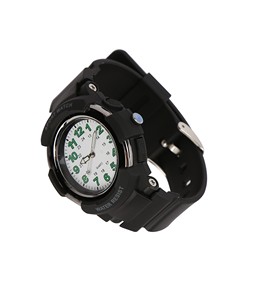
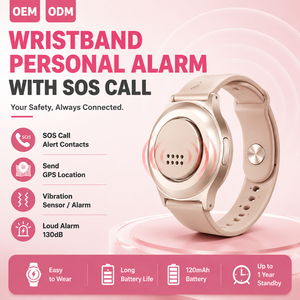
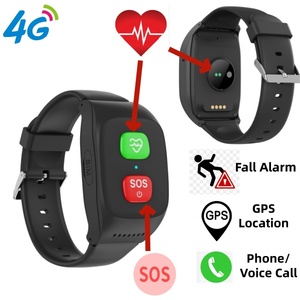
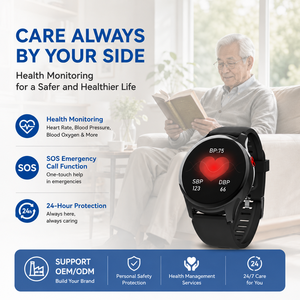
Executive Summary: The Paradigm Shift in B2B Smartwatch Procurement
Navigating energy density optimization, low-power cellular protocols, and medical-grade telemetry for global volume buyers.
In the rapidly evolving landscape of smart wearable technology, global B2B buyers—ranging from specialized healthcare distributors and telecare platform operators to enterprise lone-worker protection providers and mass-market consumer electronics retailers—are experiencing a fundamental operational pivot. While early-generation smartwatches focused heavily on high-refresh-rate color displays and multi-application operating systems, modern end-users prioritize uncompromising battery operational longevity, continuous vital sign monitoring, and dependable emergency SOS alerting.
Short battery operational cycles (24 to 36 hours) pose catastrophic friction for enterprise deployments. In Personal Emergency Response Systems (PERS), senior care monitoring, and pediatric safety devices, a dead battery transforms a vital safety tool into an unusable bracelet. Consequently, leading China smartwatch original design manufacturers (ODMs) and original equipment manufacturers (OEMs) have completely overhauled baseline hardware architectures. By combining ultra-low-power microcontrollers (MCUs), adaptive global navigation satellite system (GNSS) duty-cycling, high-voltage silicon-anode battery chemistry, and intelligent power management integrated circuits (PMICs), modern manufacturing facilities now deliver smartwatch platforms capable of operating anywhere from 7 to 30 days on a single charge without compromising continuous cellular tracking or health telemetry.
Key Information Gain: Why Battery Life Dictates B2B Sourcing ROI
From an enterprise total cost of ownership (TCO) perspective, longer battery life directly decreases device churn, minimizes customer support service requests, and increases user compliance in healthcare monitoring projects. When evaluating China wholesale long battery life smartwatch manufacturers, procurement managers must analyze more than battery milliampere-hour (mAh) metrics; they must scrutinize chip-level power budgets, firmware deep-sleep optimization, radio frequency (RF) module efficiency, and battery cycle degradation tolerances under extreme operational temperatures.
Engineered Efficiency: Core Technologies Driving Long Battery Life
A technical breakdown of MCU chipsets, battery chemistries, display power consumption, and dynamic GNSS sampling.
Dual-Core & Sensor Hub MCUs
Modern wearables separate high-power processing tasks from passive telemetry. An ultra-low-power Sensor Hub MCU handles continuous background accelerometer, PPG heart rate, and step data while drawing less than 5µA, awakening the primary application processor only when interaction is triggered.
High-Density Silicon-Anode Cells
Moving beyond traditional cobalt-based lithium polymer chemistry, top China suppliers integrate high-voltage (4.45V) silicon-anode cells. This technology yields up to 25% higher energy density per cubic millimeter, allowing sleek 950mAh capacities inside ultra-thin wrist casings.
Adaptive GNSS Duty-Cycling
Continuous GPS search quickly drains wearable batteries. Intelligent firmware algorithms utilize multi-constellation positioning (GPS + Beidou + Wi-Fi + LBS) with motion-gated duty-cycling, activating pinpoint satellite fixes only during movement or emergency SOS triggers.
Display & Optical Sensor Energy Optimization
Display illumination and optical photoplethysmography (PPG) sensors account for over 60% of daily battery drain. Premier manufacturing partners in Shenzhen and Dongguan employ dynamic refresh rate AMOLED panels or low-power Memory-In-Pixel (MIP) transflective screens. Coupled with pulse-width modulation (PWM) PPG sensor control, vital health metrics such as 24/7 continuous heart rate, SpO2 blood oxygen, and skin temperature are monitored at micro-ampere electrical consumption levels.
Future Procurement & Technology Trends for Global B2B Buyers
Strategic market forecasting: 5G RedCap, integrated eSIM solutions, AI fall detection, and medical compliance.
As enterprise smart wearable deployments scale globally, procurement teams must align their supply chain choices with upcoming technological standards and regulatory shifts. Below are four key trends reshaping smartwatch manufacturing from 2025 onward:
1. 5G RedCap (Reduced Capability) & eSIM
As 2G and 3G legacy networks decommission worldwide, 4G LTE Cat-1 and 5G RedCap represent the baseline for cellular wearables. Built-in eSIM modules eliminate physical SIM card tray leak points, maximizing IP68 waterproof integrity while reducing power consumption during network handshakes.
2. Edge-AI Emergency & Fall Analytics
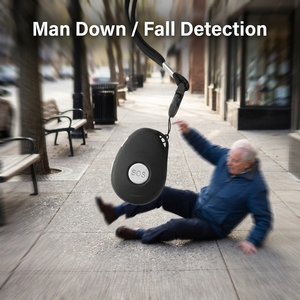
Modern PERS and lone-worker smartwatches rely on on-device machine learning algorithms. By analyzing 6-axis spatial motion vectors locally on the smartwatch, devices can distinguish real impacts from accidental drops, drastically reducing false alarm alerts without needing cloud server roundtrips.
3. Modular Platform Engineering & APIs
B2B buyers increasingly reject closed ecosystem products. Top China suppliers provide open SDKs, MQTT/HTTPS protocol documentation, and Android/iOS RESTful APIs, enabling seamless integration into third-party hospital management systems and security dashboards.
| Architecture Category | Legacy Smartwatch Platform | Next-Gen Long Battery Platform | B2B Sourcing Benefit |
|---|---|---|---|
| Cellular Chipset | Standard 4G LTE Cat-4 (High Power) | 4G LTE Cat-1 bis / 5G RedCap | 50% Lower Cellular Standby Consumption |
| Operating System | Full High-Resource Wear OS / Android | Ultra-Light RTOS (Real-Time OS) | Instant Booting, Microsecond Sleep Modes |
| Location Engine | Always-On Single GPS Fix | Hybrid GPS/Beidou/Wi-Fi/LBS Duty-Cycled | Pinpoint Location with Extended Battery |
| Battery Chemistry | Standard Li-ion (3.7V - 4.2V) | Silicon-Anode High Voltage (4.45V) | Higher mAh Capacity in Sleek Shells |
Enterprise OEM/ODM Advantage: Why Partner with Premier China Manufacturers
Vertically integrated production, rigid quality assurance, and international compliance certification ecosystems.
Sourcing directly from established China wholesale long battery life smartwatch manufacturers grants global enterprise brands an overwhelming competitive edge. Backed by over 30 years of horological craftsmanship and precision electronics manufacturing heritage, premier production hubs in Shenzhen and Dongguan offer end-to-end customization across hardware, firmware, enclosure tooling, and packaging.
Full OEM/ODM Customization
From custom ID designs, structural CAD modeling, private CNC molds, and custom PCB layout engineering to custom boot logos, UI animation skins, and branded packaging boxes.
Rigorous Quality Testing
Every smartwatch undergoes strict reliability protocol testing: IP67/IP68 dust & water submersion, 1.5-meter drop tests, thermal shock cycle testing (-20°C to 60°C), and 100,000-cycle button press validation.
Global Regulatory Compliance
Our products comply fully with international safety and telecom standards. Complete test documentation is provided for UN38.3 (battery transport), MSDS, CE, FCC, RoHS, REACH, and Bluetooth SIG.
B2B Procurement FAQ: Sourcing Long Battery Life Smartwatches
Comprehensive technical and commercial answers for enterprise wholesale buyers and importers.