1. Enterprise Manufacturing Capabilities & OEM/ODM Infrastructure
As a global pioneer in consumer electronics and specialized medical-grade telematics, our manufacturing ecosystem bridges advanced micro-electronics engineering with mass production scale. Backed by over three decades of horological and smart wearable manufacturing experience through parent entity Accutime Watch Corp and iTIME, our facilities are optimized for high-yield, high-reliability OEM/ODM procurement.
Information Gain Insight: Modern SpO2 signal degradation during low peripheral perfusion (PI < 0.2%) is the primary point of failure for generic smartwatches. Our proprietary optical signal processing circuit utilizes dual Red/Infrared LED arrays with multi-channel transimpedance amplifiers, maintaining clinical precision under ambient noise and skin pigment variance.
Our OEM/ODM engineering capabilities encompass the full vertical stack required for tier-1 global deployment:
Precision Hardware (SMT)
High-density 8-layer PCB layout, integrated Nordic/Realtek BLE SoCs, Qualcomm/Quectel 4G LTE-M modules, and anti-interference RF antenna routing.
Biosensor Firmware Integration
Custom PPG optical algorithms for blood oxygen saturation (SpO2), continuous heart rate variability (HRV), and body temperature compensation.
Strict Regulatory Compliance
ISO13485, ISO9001, CE-RED, FCC, RoHS, REACH, and UN38.3 battery certifications ensuring fast-track customs clearance globally.
2. Photoplethysmography (PPG) Architecture & Blood Oxygen Tracking Mechanics
Pulse oximetry integrated into wrist-worn wearables relies on reflectance photoplethysmography (PPG). Unlike transmissive PPG used in clinical finger clips (where light passes completely through tissue), wrist devices measure light reflected back from microvascular beds in the dermal layer.
Dual-Wavelength Optical Emmitters
Our OEM SpO2 watches deploy a precision sensor cluster featuring two primary light-emitting diodes (LEDs):
- Red Light Spectrum (~660 nm): Oxygenated hemoglobin (HbO2) absorbs less red light, allowing greater reflection during high saturation events.
- Infrared Light Spectrum (~940 nm): Deoxygenated hemoglobin (Hb) absorbs significantly less infrared light, serving as the comparative baseline.
By computing the ratio of ratios ($R = \frac{(AC/DC)_{660}}{(AC/DC)_{940}}$), our embedded DSP micro-controllers dynamically correlate optical reflectance against calibrated arterial blood gas curves, delivering pulse oximetry accurate within a ±1.5% margin when compared to clinical arterial blood samples in 85%–100% SpO2 operating ranges.
| Optical Parameter |
Standard Consumer Wearable |
iTIME OEM Medical-Grade SpO2 Watch |
B2B Procurement Advantage |
| Light Emitters |
Single Green / Red Hybrid LED |
Dual Red (660nm) + IR (940nm) + Green Matrix |
Eliminates skin pigment reading errors |
| Sampling Rate |
10 Hz – 25 Hz intermittent |
100 Hz continuous high-speed sampling |
Captures micro-changes during sleep apnea |
| Motion Artifact Filter |
Basic Moving Average Filter |
Multi-axis Accelerometer Adaptive Kalman Filter |
Accurate SpO2 readings during active movement |
| Perfusion Index Range |
Functional only at PI > 0.5% |
Ultra-sensitive sensing down to PI = 0.05% |
Reliable tracking for elderly & cold extremities |
| SDK/API Export |
Restricted App Ecosystem |
Raw PPG Data, Restful API, MQTT, Bluetooth SDK |
Seamless white-label Telehealth Integration |
3. Technology & Product Development Trends in Health Smartwatches
The global wearable medical device market is undergoing a structural shift from passive activity logging toward active remote patient monitoring (RPM) and personal safety telematics. Corporate procurement teams and consumer brand buyers must align product specifications with key emerging technological vectors:
1. Converged Cellular Telematics (4G LTE-M / NB-IoT)
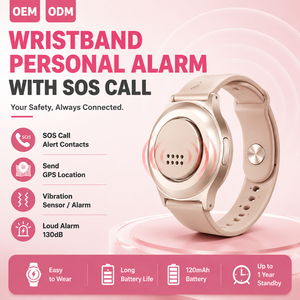
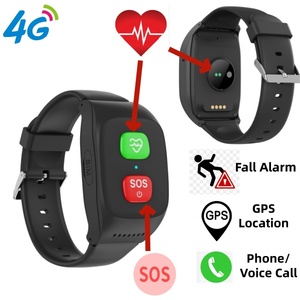
Traditional Bluetooth-only smartwatches rely on proximity to a smartphone. Next-generation senior safety and enterprise lone worker watches integrate ultra-low-power LTE-M eSIM modules, enabling direct-to-cloud SOS alarms, voice calls, and real-time SpO2 telemetry independent of mobile phones.
2. Edge AI & Autonomous Fall Detection
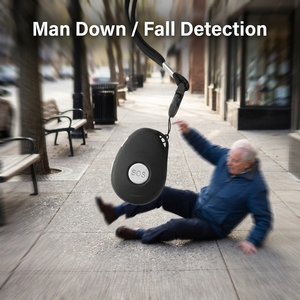
Integrating 6-axis MEMS IMU sensors with machine learning models trained on millions of impact curves allows watches to differentiate between real human falls and daily activities (e.g., dropping the device). Immediate automated emergency triggers reduce post-fall intervention response times by up to 70%.
3. Continuous Nocturnal Hypoxemia Alerting
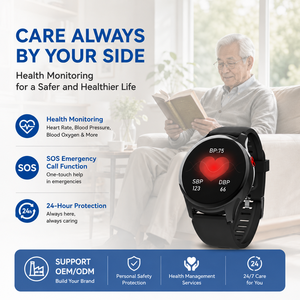
Silent hypoxemia (low oxygen levels without dyspnea) is a critical indicator of sleep apnea, respiratory illness, and cardiovascular distress. Future-proof SpO2 wearables utilize low-power nocturnal tracking modes that alert wearers or telehealth gateways if blood oxygen drops below 90% during sleep cycles.
4. Global B2B Sourcing Trends for OEM/ODM Buyers
Procurement directors, healthcare importers, and brand owners must adapt their sourcing strategies to navigate changing regulatory environments, supply chain dynamics, and firmware customization needs:
A. Demand for Open SDK and White-Label Cloud Compatibility
Buyers no longer look for hardware alone. The true value proposition lies in the data pipeline. Enterprise procurement requires OEM partners who supply well-documented Bluetooth Low Energy (BLE) protocols, Android/iOS SDKs, and MQTT/HTTP APIs for direct integration into hospital portals, senior care platforms, or proprietary brand applications.
B. Regional Cellular Frequency Certification
Global exporters must ensure 4G LTE smartwatches support multi-band carrier connectivity across target regions. Our OEM platforms support modular RF setups covering North American bands (B2/B4/B5/B12/B13/B66/B71) and European/Asian bands (B1/B3/B7/B8/B20), compliant with PTCRB, AT&T, T-Mobile, and Vodafone network approvals.
C. Modular Hardware Form Factors
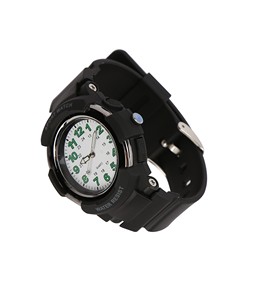
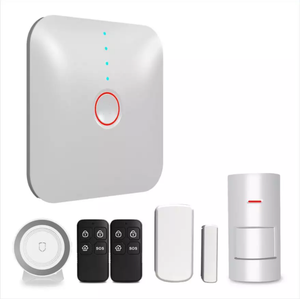
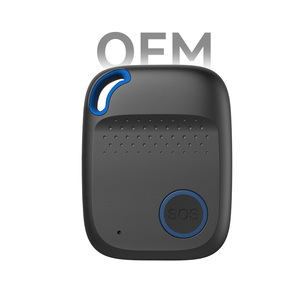
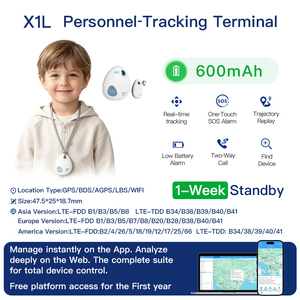
Flexibility in industrial design is paramount. As showcased in our product catalog, hardware architecture must easily convert between traditional wristwatches, clip-on belt trackers, and SOS pendants to serve diverse demographic markets ranging from school children to elderly care facility residents.
6. End-to-End OEM/ODM Project Customization Workflow
To ensure transparent project management and zero-defect product launches, our engineering team follows a structured 6-stage development lifecycle for all custom manufacturing orders:
STAGE 01
Specification Lock
Defining functional scope: SpO2 sensor models, MCU selection, battery capacity, screen resolution, 4G cellular bands, and IP rating requirements.
STAGE 02
ID Design & Tooling
Industrial design rendering, 3D mockups, ergonomic wrist profiling, and precision injection steel mold fabrication for water-tight seal integrity.
STAGE 03
PCB & Firmware Tuning
Layout of mainboard circuits, optical sensor trace optimization, Bluetooth antenna matching, and customizing boot logos/UI themes.
STAGE 04
Trial Production & Test
Pilot production run of 100-300 units subjected to thermal shock, drop tests, 5ATM/IP68 pressure tanks, and optical calibration audits.
STAGE 05
Regulatory Certification
Submitting golden units to accredited laboratories for CE, FCC, RoHS, REACH, SAR safety, and UN38.3 battery shipping clearances.
STAGE 06
Mass Yield & Logistics
High-speed SMT assembly, automated optical inspection (AOI), final functional burn-in, custom retail packaging, and global freight dispatch.