Recommended Geo-Fence & SOS Tracker Products
Direct Factory Wholesale Solutions: High-Precision GPS, Beidou, 4G LTE, and AirTag Compatible Child & Senior Safety Wearables
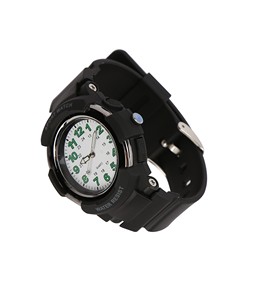
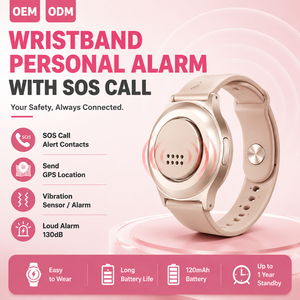
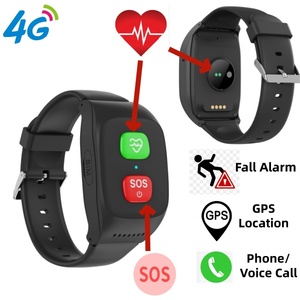
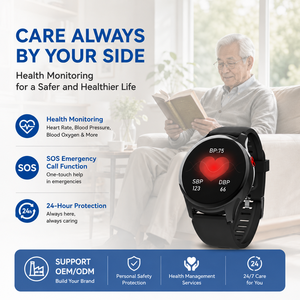
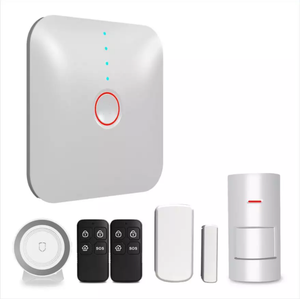
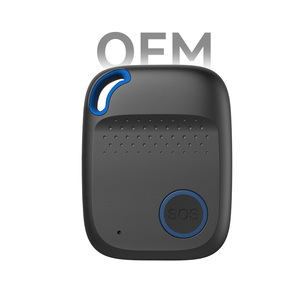
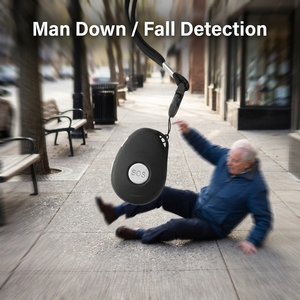
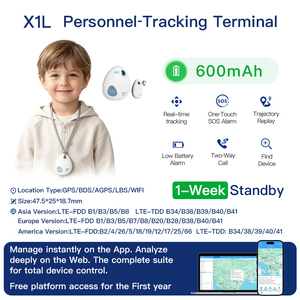
Executive Overview: Evolution of Geo-Fencing Kids Safety Wearables
The global IoT-enabled child security wearable market has undergone a structural paradigm shift. Driven by heightened consumer demand for actionable safety intelligence, modern Geo Fence Alarm Kids Watches have evolved from rudimentary cellular tracking accessories into sophisticated edge-computing devices. Today's commercial procurement managers, OEM importers, and enterprise telecom operators require hardware solutions capable of seamless positioning across indoor and outdoor environments while minimizing false alarms and battery drain.
Geofencing technology operates on spatial boundary algorithms. When a child wearing an IoT smartwatch crosses a pre-configured virtual perimeter—such as a school boundary, residential neighborhood, or recreational park—the device immediately transmits an encrypted telemetry packet over cellular networks (4G LTE-M / NB-IoT / Cat-1) to cloud servers, triggering real-time push notifications, SMS alerts, and automated voice triggers to primary guardians.
B2B Market Insights: B2B buyers moving into the 2025–2030 procurement cycles are shifting emphasis away from basic 2G connectivity toward multi-constellation GNSS chipsets (GPS + GLONASS + Beidou + Galileo), combined with Wi-Fi BSSID sniffing and Bluetooth Low Energy (BLE) micro-location tags.
Technical Architecture of Modern Geofencing Systems
To establish enterprise-grade reliability, premier OEMs integrate multi-tier fallback positioning stacks. The following benchmark table outlines the architectural difference between legacy tracking solutions and next-generation geo-fence alarm hardware manufactured by leading Chinese exporters.
| Positioning Mode | Typical Accuracy | Environment Suitability | Power Consumption | Geofence Latency |
|---|---|---|---|---|
| Dual-Frequency GNSS (L1+L5) | 1.5m – 3.0m | Open Outdoor Areas | High (35mA–50mA) | < 2 Seconds |
| Wi-Fi BSSID Sniffing | 5.0m – 15.0m | Dense Urban / Indoors | Medium (12mA–18mA) | < 3 Seconds |
| Cellular Triangulation (LBS) | 100m – 1000m | Deep Indoors / Basements | Ultra-Low (2mA–5mA) | < 5 Seconds |
| BLE 5.2 Beacon Array | 0.5m – 2.0m | Smart Schools & Malls | Micro-Power (< 1mA) | < 1 Second |
Global B2B Procurement & Technology Trends (2025–2030)
As international brand owners and B2B distributors source geo-fence alarm kids watches from certified ODM/OEM factories, several core technological shifts are dictating contract specifications and production roadmaps:
1. eSIM & Multi-Band 4G LTE Cat-1
Legacy 2G and 3G networks are rapidly reaching full shutdown across North America, Europe, and Australia. Export-oriented factories are now standardizing on 4G LTE Cat-1 and Cat-M1 modules with embedded SIM (eSIM) capabilities, enabling remote provisioning across global carriers without requiring physical SIM tray assembly.
2. Predictive AI Geofencing & Drift Suppression
Traditional GPS devices suffer from "multipath signal reflection" in urban canyons, causing false "out-of-bound" triggers. Advanced factory firmware now incorporates Kalman filtering algorithms and AI mobility models to verify true positional displacement before executing server alerts.
3. High-Density Anode Battery Integration
Kid-friendly form factors limit battery physical volume. Manufacturers are transitioning from standard Li-ion polymer to pure-cobalt chemical formulations and silicon-anode cells, increasing capacity to 680mAh–950mAh within a ultra-thin chassis while sustaining 3–5 days of active tracking.
4. Biometric Health & Fall Detection Convergence
Geofencing watches are no longer strictly limited to location. Integrations of optical PPG sensors (SpO2, continuous heart rate) alongside 6-axis MEMS accelerometers enable hybrid safety devices capable of detecting falls, high-stress events, and body temperature spikes simultaneously.
5. Strict Privacy Compliance (COPPA / GDPR)
With tightening international regulations on child data safety, B2B procurement mandates end-to-end AES-256 transmission encryption, server hosting localized within target jurisdictions (AWS EU / US West), and compliance with US COPPA and EU GDPR Article 8 standards.
6. Ecosystem Interoperability (Find My Systems)
Next-generation anti-lost smartwatches incorporate dual-chip configurations compatible with global tracking networks such as Apple Find My and Android Find My Device ecosystems, expanding tracking reliability even in dense indoor environments.
Enterprise Manufacturing Strengths & OEM/ODM Service Standards
As a leading smartwatch manufacturer and global exporter, our state-of-the-art facility integrates end-to-end production capabilities designed specifically for enterprise B2B buyers, brand owners, and telecommunication distributors. We solve critical supply chain challenges through rigorous quality control, software customization, and mass manufacturing excellence.
Core Factory Capabilities:
- Automated SMT Production Lines: High-precision surface-mount technology (SMT) lines capable of micro-component placement down to 0201 packages, ensuring minimal PCB size for sleek child-wrist ergonomics.
- In-House RF & Antenna Tuning Labs: Dedicated anechoic chamber testing for 4G LTE, Wi-Fi, and GNSS antenna matching, achieving high receiver sensitivity and optimal radiation patterns even in low-signal areas.
- 100% Waterproof Testing Infrastructure: Every single unit undergoes dual-stage pressure testing (vacuum and hydrostatic pressure tanks) to guarantee IP67 or IP68 ingress protection standards prior to final packaging.
- White-Label Software Development & SDK Provision: Full API/SDK access for iOS and Android application integration, allowing B2B clients to seamlessly bind hardware watches to their proprietary cloud platforms and user interfaces.
- Global Regulatory Certification Compliance: Pre-certified designs ready for rapid market entry with FCC, CE-RED, RoHS, REACH, UN38.3 (battery transport safety), and PTCRB carrier approvals.
B2B Procurement Frequently Asked Questions (FAQ)
Answers to critical questions asked by electronic importers, telecom operators, and wholesale distributors during supplier evaluation:
- Emergency Mode (1-minute pings): 18 – 24 hours of active operation.
- Standard Safety Mode (10-minute pings): 48 – 72 hours of operational use.
- Power-Saving / Geo-Fence Trigger Mode (1-hour pings + Motion wake): Up to 5 – 7 days standby.
Partner with a World-Class OEM/ODM Smartwatch Manufacturer
Get direct factory pricing, custom hardware specifications, white-label app demos, and engineering support for your upcoming safety wearable deployment.
Send an Inquiry