Industry Whitepaper: The Strategic Sourcing Roadmap for Blood Oxygen Tracker Watches in Mexico
As Latin America’s second-largest economy, Mexico is witnessing an unprecedented convergence of digital health adoption, telecare infrastructure modernization, and heightened demand for personal safety IoT hardware. Commercial importers, medical equipment distributors, enterprise lone-worker agencies, and retail chain buyers across Mexico City, Guadalajara, Monterrey, and Puebla are actively seeking accredited OEM/ODM smartwatch manufacturing partners capable of delivering clinical-grade blood oxygen (SpO2) monitoring alongside robust 4G LTE cellular connectivity.
Navigating the Mexican wearable technology sector requires deep technical compliance with national telecommunication standards, precise optical sensor engineering tailored to diverse environmental topographies, and flexible firmware integration. This comprehensive guide outlines the technical specs, localized application scenarios, regulatory frameworks (IFT and COFEPRIS), and factory selection criteria essential for B2B procurement leaders sourcing blood oxygen tracker watches from direct manufacturing exporters.
Key Strategic Takeaway for Mexican Buyers: Altitude plays a critical role in blood oxygen monitoring across central Mexico. Standard consumer photoplethysmography (PPG) algorithms fail to account for physiological hypobaric hypoxia in high-elevation cities like Mexico City (2,240m) and Toluca (2,660m). Our factory-calibrated SpO2 wearables feature dynamic atmospheric pressure compensation algorithms for superior measurement accuracy.
Photoplethysmography (PPG) Architecture: Achieving Clinical-Grade SpO2 Accuracy
Blood oxygen saturation ($SpO_2$) reflects the percentage of oxygen-saturated hemoglobin relative to total hemoglobin in the blood. In wrist-worn form factors, measuring SpO2 accurately without arterial blood sampling relies on advanced reflective Photoplethysmography (PPG).
Dual-Wavelength Optical Array Engineering
Our OEM smartwatch platforms utilize a multi-spectrum optical sensor cluster mounted on the bottom casing, comprising:
- 660 nm Red Light-Emitting Diodes (LEDs): Highly sensitive to deoxygenated hemoglobin ($Hb$).
- 940 nm Near-Infrared (NIR) LEDs: Highly absorbed by oxygenated hemoglobin ($HbO_2$).
- Low-Noise Silicon Photodiodes: Positioned with precise optical isolation barriers to prevent signal crosstalk and light leakage.
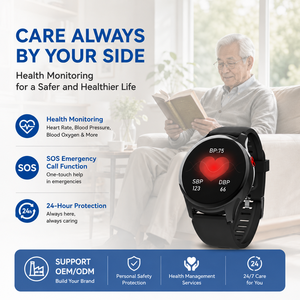
By computing the ratio of absorbance between the red and infrared pulsatile AC signals relative to their static DC baselines (the $R$-value), the internal digital signal processor (DSP) derives the physiological $SpO_2$ percentage in real time. Combined with continuous heart rate monitoring, skin temperature sensors, and multi-axis accelerometers, the wearable creates a complete vital signs telemetry profile.
Localized Application Scenarios Across Mexico’s Public & Commercial Sectors
1. Telemedicine & Senior Telecare (RPM)
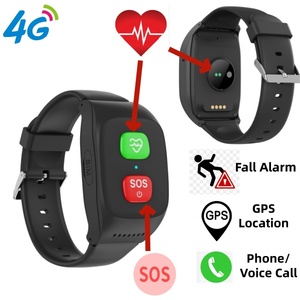
Private hospital networks (such as Grupo Ángeles and Star Médica) and public health organizations across Mexico are expanding Remote Patient Monitoring (RPM) for chronic respiratory diseases (COPD, asthma, post-viral rehabilitation). Our 4G LTE PERS (Personal Emergency Response System) watches stream vital signs directly to cloud dashboards via RESTful APIs and MQTT protocols, enabling clinicians in Mexico City or Monterrey to monitor patient hypoxia triggers remotely.
2. Enterprise Lone-Worker & Industrial Mining Safety
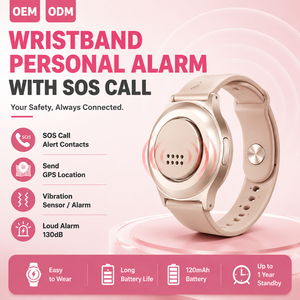
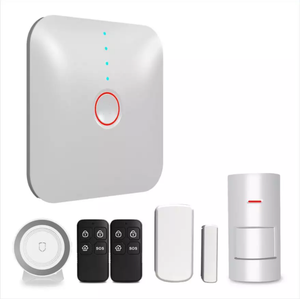
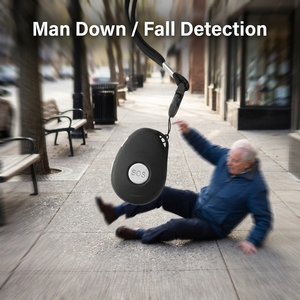
Mexico’s robust mining, oil & gas, and heavy manufacturing sectors (in Sonora, Zacatecas, Chihuahua, and Nuevo León) demand hazardous-environment worker safety gear. Our 4G LTE PERS Lone Worker watches combine continuous SpO2 oxygen intake monitoring, 130dB panic alarms, 3D fall-detection man-down alerts, and GPS/Beidou dual positioning to protect personnel working in subterranean or high-altitude industrial operations.
3. High-Altitude Urban Wellness & Sports
Millions of urban residents in the Valley of Mexico reside above 2,200 meters. High altitude causes physiological oxygen desaturation during physical exertion. Fitness enthusiasts and elderly citizens rely on smartwatches calibrated for hypobaric pressure to ensure safe cardiovascular exercise and early detection of exertional hypoxia.
4. Urban Family & Child Safety Networks
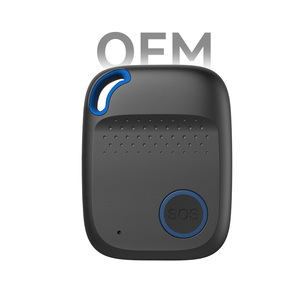
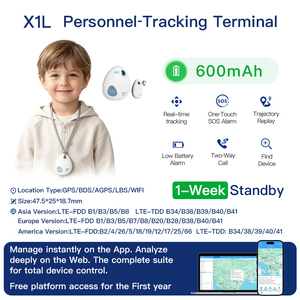
Concerns over urban security make real-time location tracking vital for families in dense metropolitan centers. Our 4G Kids GPS Smartwatches and AirTag-compatible bracelets feature geofencing boundaries, two-way cellular voice calls, SOS quick triggers, and remote ambient audio monitoring to provide parents with instant peace of mind.
Market & Regulatory Trends Impacting Wearable Sourcing in Mexico
Importers and brands expanding their presence in Mexico must align with evolving technical and regulatory mandates:
1. Mexican Cellular Spectrum Compatibility (Telcel, AT&T Mexico, Movistar)
Deploying cellular IoT smartwatches in Mexico requires support for regional LTE frequency bands. Our 4G LTE modems are hardware-configured to support:
- Band 2 (1900 MHz) & Band 4 (AWS 1700/2100 MHz): Primary urban LTE carrier backbones for Telcel and AT&T Mexico.
- Band 5 (850 MHz): Essential for extended suburban and rural network coverage.
- Band 28 (700 MHz - Red Compartida): Crucial for wholesale open-access network communications across interior logistics hubs.
2. IFT (Instituto Federal de Telecomunicaciones) Homologation
All radiofrequency-emitting equipment imported into Mexico must undergo IFT certification to comply with NOM-208-SCFI-2016. As an experienced exporter, our factory provides complete test reports (SAR, RF power output, frequency spectrum compliance) from accredited lab partners to streamline your local IFT approval process.
3. COFEPRIS Regulatory Distinction for Health Wearables
Distinguishing between wellness wearables and regulated medical devices is essential under COFEPRIS (Comisión Federal para la Protección contra Riesgos Sanitarios) guidelines. Our products are exported with dual firmware modes: standard consumer wellness mode (ideal for fast-track retail entry) or medical-grade SDK mode for integration into official healthcare telecare programs under certified importer sanitary registries.
Factory Superiority & OEM/ODM Manufacturing Capabilities
Backing our product catalog is over 30 years of horological and smart wearable engineering heritage under Accutime / iTIME global operations. Sourcing directly from our manufacturing facilities offers distinct competitive advantages:
Custom Firmware & Spanish Localized GUI
We provide full software customization, including native Spanish language user interfaces, custom brand boot screens, customized companion iOS/Android apps, and localized cloud server deployment on AWS Mexico region for low latency.
Rigorous Quality Assurance & Testing
Every unit undergoes 100% automated optical inspection (AOI), IP67/IP68 hydro-chamber pressure testing, dynamic PPG simulator verification against reference arterial pulse oximeters, and thermal shock testing.
Logistics Optimization for Mexico Customs
We handle export documentation tailored to Mexican customs requirements, providing harmonized tariff coding (HS Code 8517.62 / 9031.80), Certificate of Origin support under trade agreements, and direct air/sea freight routing to Manzanillo, Veracruz, or Mexico City Airport (AICM).