Featured Exporter Product Portfolio
High-precision step counting, fall detection, and real-time GPS tracking wearables certified for seamless integration into Japanese cellular networks and enterprise IoT platforms.
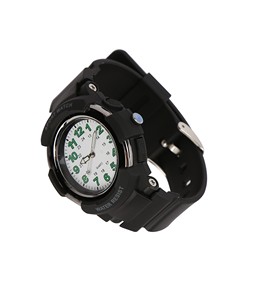
Kids Anti Lost Smart Watch With Airtag Compatible With Apple Find My and Android Dual System Tracker Bracelet
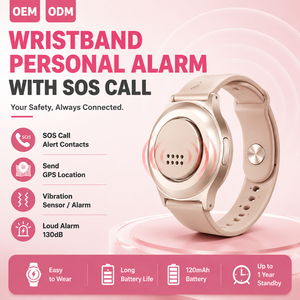
130DB Safe Sound Personal Safety Alarms SOS Watch With GPS Location SMS Call Trigger Outdoor Fall Alert For Elderly Women Kids
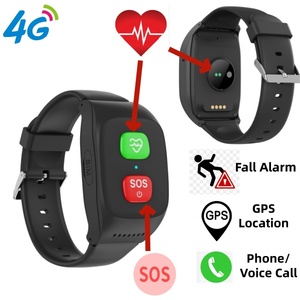
4G Elderly Smart Watch With GPS Tracker Phone Call Heart Rate Monitor Waterproof Fall Detection Device Senior SOS Watch Bracelet
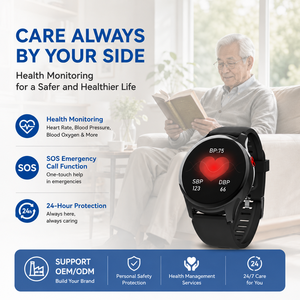
Elderly GPS Tracker Smart Watch 4G Waterproof with SOS Button Beidou Positioning Geofencing 680mAH
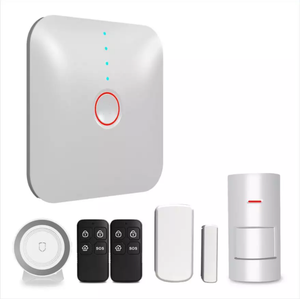
Wireless Sos Medical Alert Phone Emergency Senior Watch 4g Gps Sos Alarm Personal Emergency System Elderly Care Fall Down Alert
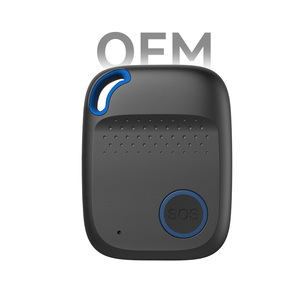
4G LTE PERS Lone Worker Senior Assistance Fall Alarm GPS Tracker 950mAh Two Way Calling Medical Alarm Emergency SOS Button
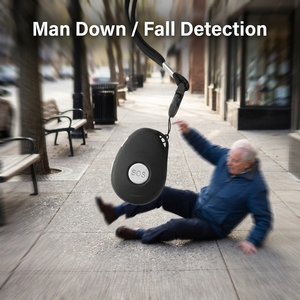
4G Waterproof GPS Tracking Pendant With SOS Panic Button Personal Alarm With Watch Case and Keychain
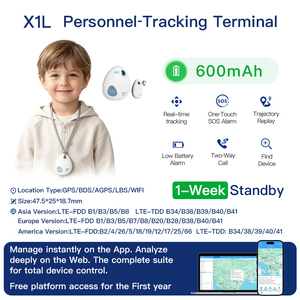
Wholesale Supply Waterproof GPS Elderly/Kids Locator SOS Emergency Call Button 1-Year GPRS Tracking GSM/WiFi Positioning
Executive Summary: The Evolving Step Counter & Activity Tracker Market in Greater Tokyo
As the Greater Tokyo Metropolitan Area continues to maintain its status as the world's most populous megacity with over 37 million residents, the demand for high-precision motion tracking, health telemetry, and personal safety devices has undergone a structural paradigm shift. No longer satisfied with basic step-counting pedometers, Tokyo’s municipal health authorities, enterprise wellness program managers, and eldercare operators demand integrated 3D MEMS accelerometer-driven activity trackers capable of navigating dense urban canyons, subterranean subway networks, and micro-mobility environments.
For global importers, B2B distributors, and OEM/ODM buyers serving the Japanese market, sourcing step counter activity trackers requires an intimate understanding of Tokyo's unique demographic and technological landscape. Japan’s accelerated transition into a "Super-Aged Society" (where over 29% of the population is aged 65 or older) has unified the requirements for fitness step tracking with personal emergency response systems (PERS), fall detection, and continuous vital signs monitoring.
This technical whitepaper provides an exhaustive analysis of exporting high-performance activity trackers and smart wearable locators into Tokyo. It evaluates algorithm calibration for public transport vibration filtering, carrier band compatibility (NTT Docomo, SoftBank, KDDI), regulatory compliance under TELEC (Radio Law) and PSE (Electrical Appliance Safety Law), and data privacy architectures satisfying Japan’s Act on the Protection of Personal Information (APPI).
Sensor Fusion & Motion Algorithm Engineering for Tokyo Commuter Environments
Standard pedometers relying solely on basic single-axis thresholding fail catastrophically in Tokyo’s transit infrastructure. Passengers riding the Yamanote Line, Chuo Line, or Tokyo Metro experience high-frequency micro-vibrations, sudden deceleration, and dense crowd compression that typically trigger false step counts or misclassify train transit as active walking.
Our enterprise step tracker export lineup utilizes custom-tuned 6-Axis Sensor Fusion (3-Axis Accelerometer + 3-Axis Gyroscope) coupled with proprietary Digital Signal Processing (DSP) algorithms. This software architecture differentiates between rhythmic human gait cycles and transit-induced mechanical oscillations.
| Performance Benchmark | Standard Consumer Tracker | Tokyo-Optimized Exporter Grade Tracker | Impact on Enterprise Deployment |
|---|---|---|---|
| Transit Vibration Filtering | False step accumulation on trains/buses (+25% error) | Adaptive Kalman Filtering isolates human gait frequencies (0.8Hz - 3.2Hz) | Accurate corporate wellness rewards & clinical data integrity |
| Dense Urban Positioning | GPS signal drop in Shibuya/Shinjuku high-rise canyons | Hybrid GPS + Wi-Fi MAC Sniffing + LBS + Beidou Quad-Mode | Sub-5 meter location resolution across urban Tokyo |
| Subterranean Tracking | Complete tracking outage in underground stations | Pedestrian Dead Reckoning (PDR) with barometric pressure step-height adjustment | Continuous safety monitoring in Tokyo Metro complexes |
| Battery Consumption | 12–24 hours under active cellular/GPS tracking | Adaptive power mode: up to 7 days standby with 680mAh–950mAh Li-Po | Reduced charging frequency for senior citizens and lone workers |
Furthermore, step count data pipeline security is designed at the hardware level. Raw accelerometer data is sanitized via an on-chip ARM Cortex-M4 MCU before transmission, ensuring that bandwidth utilization over 4G LTE-M / NB-IoT bands remains minimal while conserving battery power for emergency SOS signal readiness.
Localized Application Scenarios across Tokyo’s Enterprise Ecosystem
Deployment requirements vary substantially across Tokyo’s 23 wards and Western suburbs. Below are the primary procurement channels and real-world deployment scenarios where our activity tracker and safety locator hardware excels:
1. Elder Telecare & Nursing Facilities (Silver Economy)
Integrated into care homes in Setagaya and Suginami wards, our 4G elderly smart watches monitor daily step goals to maintain physical mobility while acting as active fall detection devices. Automatic tri-axial G-force threshold sensors detect sudden impact and dispatch emergency SMS/voice calls to facility staff alongside real-time GPS coordinates.
2. Tokyo School Commute & Child Safety Networks
Tokyo elementary students independently commute via trains and walking paths. Our Kids 4G Anti-Lost trackers (featuring Apple Find My dual-system compatibility and 130dB safe sound alarms) allow parents to define precise safe-zone geofences around schools and transit stations, alerting guardians if a child deviates from their routine walking route.
3. Corporate Health & Productivity Insurance Incentives
Major Tokyo enterprises utilize gamified step-tracking programs to lower corporate health insurance premiums. Our OEM trackers deliver tamper-proof activity data logs via encrypted cloud APIs directly into company wellness applications, verifying daily step targets across commuting staff.
4. Tokyo Construction & Infrastructure Lone Workers
For civil engineering crews working night shifts on Tokyo's expressway or rail networks, our 4G LTE PERS Lone Worker devices act as ruggedized step, activity, and safety monitors equipped with dedicated SOS panic keys, two-way VoLTE audio communication, and rugged IP68 dust/waterproofing.
Key Localized Trends Driving Activity Tracker Procurement in Japan
B2B buyers and importers supplying Tokyo must align their product specifications with emerging local market vectors. Sourcing obsolete technology or failing to comply with local telecommunication standards inevitably leads to severe customs delays and market rejection.
1. 3G Sunset & 4G/NB-IoT Transition
With Japan’s major carriers (NTT Docomo, SoftBank, KDDI) executing full 3G network shutdowns, exporters must provide 4G LTE Cat-1, LTE-M, or NB-IoT connectivity supporting local Japanese cellular frequency bands (Band 1, Band 3, Band 8, Band 18, Band 19, Band 26).
2. Mandatory TELEC & PSE Certification
Wireless devices imported into Tokyo require the TELEC (MIC Technical Conformity Mark) for radio wave compliance, alongside PSE certification for lithium-polymer batteries and charging adapters to ensure consumer electrical safety under Japanese law.
3. Privacy & APPI Data Security Compliance
Personal health telemetry, biometric pulse data, and GPS location history are classified as sensitive personal data under Japan's Act on the Protection of Personal Information (APPI). Wearables must support AES-256 cloud encryption and localized server routing options.
Why Tokyo Enterprise Buyers Partner With Our Manufacturing Hub
Backed by over 30 years of horological engineering excellence and wearable technology innovation, our manufacturing facility stands as a premier supplier for Tokyo-bound B2B buyers. We combine precision hardware fabrication with deep software localization capabilities.
Full Japanese Band Support
Custom RF front-end tuning engineered specifically for NTT Docomo, SoftBank, and KDDI spectrums.
TELEC & ISO Certified
ISO9001 and ISO13485 medical device quality management facilities ensuring zero-defect export yields.
Custom Firmware & Japanese UI
Complete white-label firmware customization including Japanese Kanji UI fonts, companion iOS/Android apps, and API Webhooks.
Agile OEM/ODM Supply Chain
Flexible Minimum Order Quantities (MOQ), custom tooling, and expedited air shipping routes straight to Tokyo Port / Narita Logistics Hubs.
Our dedicated international trade team assists Tokyo importers through every stage of hardware deployment: from prototype sample flash-testing in Shinjuku, to TELEC lab certification submission, through to bulk production and post-sales technical support.
Frequently Asked Questions (FAQ) for Sourcing Activity Trackers for the Tokyo Market
Accelerate Your Wearable Hardware Deployment in Tokyo
Partner with an industry-leading step counter activity tracker exporter. Contact our international B2B engineering team today to request TELEC test reports, hardware samples, or custom OEM/ODM quotations tailored for Japan's market.